Table of Contents

  • What Are the Different Types of Premium Headstone Finishes?

  • How Are Artistic Carvings and Engravings Applied to Headstones?

  • Which Materials Are Best Suited for Premium Finishes and Artistic Enhancements?

  • How Can Custom Memorial Designs Reflect Personal and Cultural Significance?

  • What Are the Maintenance and Longevity Factors for Premium Headstone Finishes?

  • Why Choose Remembrance Headstones for Luxury Headstone Craftsmanship?

  • Frequently Asked Questions

  • Conclusion

Premium headstone finishes and artistic enhancements combine material knowledge with careful craftsmanship to produce memorials that are both durable and deeply meaningful. This guide explains what premium finishes are, why they matter for preservation and visual impact, and how techniques — polishing, honing, laser etching, deep relief carving, and bronze inlay — influence longevity and appearance. If you're searching for "artistic headstone designs" or "premium granite finishes for graves," you'll find clear information on finish types, carving and etching methods, material suitability, personalization choices, and practical maintenance tips. Remembrance Headstones works directly with families through bespoke design workflows and realistic previews; the remainder of this guide focuses on the technical and aesthetic points that help you make confident choices. We'll begin by defining finish types, then look at artistic application methods, compare materials, explore how custom designs convey personal and cultural meaning, and close with care guidance and an overview of Remembrance Headstones' services and support.

What Are the Different Types of Premium Headstone Finishes?

A headstone finish is the final surface treatment applied to a memorial stone that influences reflectivity, texture, legibility, and resistance to weather. Finishes range from high-gloss polish that brings out color and contrast to honed or matte options that reduce glare and mask small abrasions; satin and textured surfaces sit between those extremes and suit specific looks. Your choice affects how inscriptions read in changing light, how biological growth adheres, and how the stone weathers in different climates. The short comparison below can help match a visual goal with practical needs when picking a finish.

This table compares common premium finishes, their typical uses, and the visual effect they produce.

Finish Type

Typical Uses

Visual Effect

Polished (high-gloss)

Upright monuments, dark granites

Rich color depth, mirror-like surface, strong contrast for engraving

Honed (satin)

Traditional markers, classical designs

Soft sheen, less glare, gentler tactile feel

Matte

Contemporary or engraving-heavy designs

Low reflectivity, hides micro-scratches and fingerprints

Textured/Sandblasted

Relief work or rustic finishes

Tactile surface, stronger shadowing for carvings

This quick table clarifies where each finish excels and can guide a durable, appropriate choice for cemetery settings and inscription styles.

How Does Polished Granite Enhance Memorial Durability and Appearance?

Polished granite is brought to a glass-like sheen by progressively finer abrasives. That finish deepens color, seals microscopic pores, and reduces water penetration—making stains and biological growth such as lichen or moss easier to remove. The high reflectivity also improves perceived contrast for incised or sandblasted lettering, boosting legibility from a distance and in lower light. These qualities explain why polished granite is a common choice for premium carved headstones and detailed portrait etching.

What Are Honed and Matte Finishes and Their Benefits?

Honed and matte finishes are produced by stopping the polishing process earlier or using abrasive pads to remove shine while keeping a smooth surface. They scatter light instead of reflecting it, creating a subdued look that suits traditional memorials and settings where glare or fingerprints are concerns. Honed surfaces are better at concealing small tool marks or light scratches than high-gloss polish, so they can be ideal for shallow engravings or placements that call for a more understated presence.

How Are Artistic Carvings and Engravings Applied to Headstones?

Artistic carvings and engravings turn a slab of stone into a personal memorial using a mix of mechanical, digital, and hand-finishing techniques. Common approaches include deep relief carving for sculptural motifs, sandblasting and hand tools for lettering, and laser etching for photographic portraits. The chosen method depends on desired depth, detail, and longevity. Production typically follows a clear workflow—design approval, roughing out, detailing, and sealing—that balances artisan skill with machine precision to deliver reliable results. Below are the primary techniques and their common uses.
  • Deep Relief Carving: Best for three-dimensional figures and sculptural memorials where depth and shadow create presence.
  • Laser Etching: Ideal for high-fidelity photographic portraits and fine tonal work reproduced on stone surfaces.
  • Sandblasting Engraving: Common for crisp lettering and shallow bas-relief, adaptable to stenciled or routed designs.
Each technique offers a different balance of texture, detail, and durability, so the right choice depends on the design goals and the memorial’s environment.

What Techniques Are Used in Deep Relief Carving and Sculptural Elements?

Deep relief carving removes material to form raised shapes that cast shadow and convey sculptural detail. Craftspeople use hand chisels, pneumatic tools, and CNC-assisted routing for accurate roughing. The process begins with a detailed drawing or 3D model, moves through roughing to establish primary volumes, and finishes with careful hand tooling to retain an artisanal character. In hard stones like granite, deep relief weathers well because mass and shadow protect critical edges. Given the time and specialist skill required, deep relief is often reserved for centerpiece memorials and motifs with significant personal or cultural meaning.

How Does Laser Etching Create Detailed Memorial Portraits?

Laser etching maps a greyscale image into precise micro-abrasions on the stone to reproduce tonal gradations without adding pigments that can flake. Good image preparation—high-resolution, high-contrast photos converted into appropriate raster formats—yields better depth and facial clarity. Technicians commonly fine-tune brightness and contrast to suit the stone. Laser etching works particularly well on granite because engraved areas contrast with polished surfaces, enhancing portrait legibility; a protective finish can help slow weathering of the etched tones. Understanding raster versus vector approaches explains why laser etching is the preferred method for lasting, photo-like memorial portraits.

Which Materials Are Best Suited for Premium Finishes and Artistic Enhancements?

Material choice determines which finishes and artistic techniques will look best and endure longest in local conditions. Granite, marble, and bronze each have distinct strengths: granite for durability and high polish, marble for classical carving with a softer patina, and bronze for durable plaques and inlays that resist biological growth. The table below highlights finish options, expected durability, and maintenance considerations for common memorial materials.
Material
Finish Options
Durability / Maintenance / Best Uses
Granite (dark)
High-gloss polish, honed, sandblasted
Very durable; low maintenance; ideal for polished portraits and deep carving
Marble
Honed, polished, carved relief
Softer and more prone to weathering; regular cleaning recommended; best for classical sculpture
Bronze
Patinated finish, polished accents, inlay
Extremely durable; needs periodic waxing to preserve patina; excellent for plaques and inlays

How Do Granite, Marble, and Bronze Differ in Finishing Options?

Granite accepts a wide range of finishes and holds sharp detail—its hardness allows high-gloss polishing that maximizes contrast for laser etching and sandblasted lettering. Marble, being softer and more porous, takes classical carving well but will develop a patina and can erode faster in acidic conditions; honed or gently polished finishes usually preserve marble’s subtleties. Bronze adds a complementary metal element for plaques and inlays; with proper patination and conservation it provides a long-lasting visual and tactile contrast to stone. These material tendencies shape both the design language and the maintenance expectations for a premium headstone project.

What Are Material-Specific Polishing and Carving Considerations?

Polishing protocols differ by material: granite is finished using diamond abrasives across graded grits to reach a glass-like sheen, while marble requires finer, gentler abrasives and careful sealing to avoid chemical etching. Carving tools also vary—hard stones need carbide or diamond tooling and CNC roughing, whereas softer stones like marble allow more hand-carving. Sealants and protective coatings must match the stone: some polymer sealants work well on polished granite but can trap moisture in softer stones, so products must be selected for both finish and local climate. These technical choices affect cost, lead time, and long-term preservation strategies for the memorial.

How Can Custom Memorial Designs Reflect Personal and Cultural Significance?

Custom designs translate personal stories, cultural symbols, and spiritual iconography into a lasting memorial language that speaks across generations. Designers integrate unique shapes, inscriptions in different languages, and motifs—floral, occupational, or spiritual—while following cemetery rules and structural limits; sensitive collaboration with family members ensures respect and accuracy. The approval process commonly uses sketches and, increasingly, 3D renderings to confirm scale, placement, and finish choices before fabrication starts. Remembrance Headstones provides an end-to-end service with consultation, 3D previews, and approval workflows to help families refine personalized memorials with confidence. The following sections look at shape options and rendering tools in more detail.
Families commonly choose from a range of traditional and custom shapes and symbols:
  • Upright, slant, and flat markers for standard cemetery placement and different visibility needs.
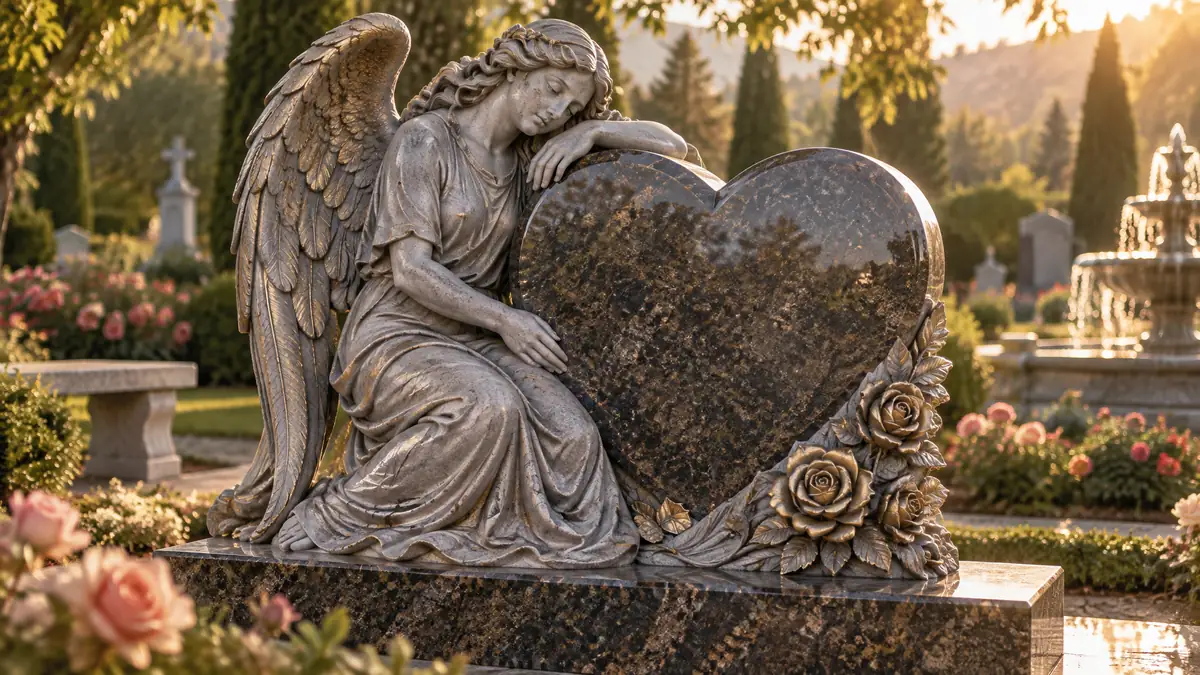
  • Heart-shaped, silhouette, and bespoke-profile stones for distinctive personal memorials.
  • Religious symbols (crosses, stars, crescents) and cultural emblems integrated as relief or inlay.
These shape and symbol choices require early coordination with cemetery authorities to ensure compliance and practical installation.

What Unique Headstone Shapes and Religious Symbols Are Available?

Custom shapes range from classic uprights and slants to heart-shaped tablets, columns, and fully bespoke silhouettes that reflect hobbies, professions, or a loved one’s profile. Religious and cultural symbols—crosses, menorahs, saints, and traditional motifs—can be rendered in low or high relief, laser-etched, or made as bronze inlays depending on desired permanence and style. Choosing a shape and symbol also involves practical concerns—footprint, foundation needs, and sightlines in the cemetery—which are resolved during design review. Clear communication with cemetery staff and the design team avoids installation delays and ensures the symbolism appears as intended.

How Does 3D Rendering Support Personalized Design Approval?

3D rendering turns concept sketches into photorealistic models that show scale, finish effects, and engraving placement under simulated light, letting families visualize the finished memorial before fabrication. The usual workflow includes an initial concept render, iterative revisions for typography and motif placement, and a final sign-off model that confirms dimensions, base details, and finish. Seeing the design in 3D reduces revision cycles and minimizes surprises by showing how polished versus honed finishes change contrast and how carved depths read in different lighting. This visual clarity speeds decision-making and production once approvals are complete.

What Are the Maintenance and Longevity Factors for Premium Headstone Finishes?

Your choice of finish affects a memorial’s resistance to weathering, biological growth, and surface wear; knowing these links helps set realistic care and restoration plans. Polished granite resists staining and is easier to clean, while honed and matte finishes can require gentler cleaning and closer checks for biological growth. Environmental influences—coastal salt spray, urban pollution, or heavy shade that encourages lichen—change expected maintenance schedules, so owners should tailor cleaning and protection to site conditions. The table below offers maintenance guidance linked to common finish types to set reasonable expectations for longevity and care.
Finish
Longevity / Weather Resistance
Recommended Maintenance Frequency & Methods
Polished granite
High longevity; resists staining
Inspect yearly; clean gently with pH-neutral detergent; reseal every 5–10 years if needed
Honed (satin)
Moderate; hides micro-abrasions
Clean every 1–2 years; avoid abrasive scrubbing; spot-seal if staining occurs
Matte/textured
Moderate; can trap biological growth
Clean annually with soft brushes; seek professional restoration for deep soiling
Bronze inlay
Very durable; patina evolves
Wax every 1–2 years; consult a conservator if corrosion appears

How Do Finishes Affect Durability and Weather Resistance?

Finishes change how water, pollutants, and biological agents interact with the stone surface—polished finishes shed water and give fewer attachment points for lichen, while textured finishes create niches where growth can take hold. In coastal or acidic environments, softer materials and highly worked edges are more vulnerable to chemical wear, so hard granites and conservative edge detailing are often preferred. Protective steps—compatible sealants, good drainage around the base, and avoiding abrasive cleaners—help extend a memorial’s working life. Understanding site vulnerability informs sensible cleaning and restoration choices that preserve inscriptions and artistic elements.

What Are Recommended Cleaning and Restoration Practices?

Safe cleaning starts with non-ionic, pH-neutral detergents, soft nylon brushes, and plenty of water—strong acids, bleach, or power-washing can remove patina, etch softer stone, or push water into joints. Bronze elements benefit from periodic waxing with conservation-grade wax to protect the patina and slow corrosion. For severe soiling or delicate restoration, consult a professional restorer who can use poultices, micro-abrasive cleaning, or careful re-polishing without damaging inscriptions. Restoration options include re-cutting faint lettering, re-polishing polished surfaces, or selectively replacing inlays; professional intervention is recommended when surface loss affects legibility or structural soundness. Clear maintenance protocols reduce long-term costs and help preserve the memorial’s intended appearance.

Why Choose Remembrance Headstones for Luxury Headstone Craftsmanship?

Remembrance Headstones specializes in luxury custom headstones and memorial art, offering premium finishes, artistic carvings, and personalized designs including special-shaped stones, upright, slant, and flat granite markers. We focus on handcrafted memorial art made from high-quality, durable stone meant to last, while delivering a personalized design experience families can complete with care and privacy from home. Financing options include Klarna and in-house 0% financing, and Remembrance Headstones provides a complimentary personalized QR code for a dedicated online memorial page. The company highlights its experience and scale: over 60 years of experience and more than 500,000 installed headstones.
The following list summarizes the service features families most often value:
  • Bespoke Design Process: One-on-one consultation, 3D previews, and iterative sign-offs that center family input.
  • Financing Flexibility: Options like Klarna and in-house 0% financing to help manage cost without sacrificing design.
  • Digital Commemoration: A complimentary personalized QR code linking to a private memorial page for extended storytelling.

What Experience and Financing Options Support Customer Comfort?

Remembrance Headstones frames experience and financing as practical supports, not sales pressure. Payment plans like Klarna and our in-house 0% financing provide ways to spread cost while maintaining design quality, and onboarding typically begins with a consultation and an agreed payment schedule. The company's stated experience—over 60 years and more than 500,000 installed headstones—serves as a trust signal that our craft and installation practices are established. We emphasize compassionate service and coordination with funeral directors to ensure the memorial fits ceremonial and cemetery requirements.

How Do Personalized QR Codes Enhance Memorial Engagement?

A complimentary personalized QR code links the physical memorial to a dedicated online memorial page, allowing photos, audio, video, and visitor-submitted remembrances while keeping privacy controls in the family’s hands. QR codes let distant friends and relatives access biographies and tributes and make it easy to update memories over time. Families control privacy and moderation, giving them choice over what is displayed and who can contribute. This digital layer complements the tactile permanence of the stone and makes the memorial a living archive for future generations.
Remembrance Headstones welcomes inquiries and design consultations through the website or our design-quiz tools, providing a clear path to begin a personalized memorial project and to explore financing and digital memorial options with compassionate guidance.

Frequently Asked Questions

What is the process for selecting a custom headstone design?

Choosing a custom headstone is a step-by-step process that helps ensure the finished memorial reflects personal and cultural meaning. We begin with a conversation to gather ideas, preferences, and any symbols or inscriptions you want to include. Next come sketches and 3D renderings so you can see scale and finishes, with opportunities to revise before final approval. The process prioritizes collaboration and respect for the person being remembered, while ensuring the memorial complies with cemetery regulations.

How can families ensure their chosen headstone complies with cemetery regulations?

Start by reviewing the cemetery’s guidelines on size, shape, materials, and design features. Many cemeteries publish approved specifications. During design, communicate directly with cemetery staff and your memorial designer to confirm the proposed plan meets requirements. Proactive coordination prevents installation delays and ensures the memorial is placed and displayed correctly.

What are the environmental factors that can affect headstone maintenance?

Local climate and conditions significantly affect maintenance needs. High humidity or frequent rain encourages moss and lichen, requiring more frequent cleaning. Coastal locations expose memorials to salt spray that can affect metals. Urban pollution can accelerate surface wear. Knowing these factors helps families choose finishes and materials suited to the site and set a realistic care schedule.

What are the benefits of using bronze inlays in headstone designs?

Bronze inlays offer durability and a classic aesthetic. Bronze resists biological growth and weathers into a protective patina that adds depth over time. Combining bronze with stone creates striking contrast and allows for detailed motifs that hold up well outdoors. Its versatility makes bronze a popular option for personalized plaques and accents.

How does the choice of finish impact the visibility of inscriptions on headstones?

Finish choice greatly affects inscription visibility. Polished surfaces increase contrast, helping engravings read clearly from a distance. Honed or matte finishes diffuse light and can soften inscriptions, which may reduce glare in bright conditions. Consider the inscription style and the site’s typical lighting when selecting a finish to ensure the text remains legible.

What maintenance practices are recommended for different headstone finishes?

Maintenance varies by finish. For polished granite, inspect yearly and clean gently with a pH-neutral detergent; reseal every 5–10 years if needed. Honed finishes benefit from cleaning every 1–2 years and avoiding abrasive scrubbing. Matte finishes may need annual soft-brush cleaning to prevent biological growth. Bronze elements should be waxed every 1–2 years to preserve the patina. Tailoring care to the finish helps preserve the memorial’s appearance and integrity.

Conclusion

Choosing premium finishes and thoughtful artistic touches helps create a lasting tribute that honors personal and cultural memory while providing lasting beauty and durability. By understanding finish types, carving and etching approaches, material trade-offs, and care practices, families can make informed decisions that reflect what matters most. Explore our custom memorial options to design a unique tribute that resonates with your family’s story. Contact Remembrance Headstones today to begin your personalized memorial journey.

Blog

Call Now for a Free Consultation

Call Now +1 888 248 6813

Loading

80%