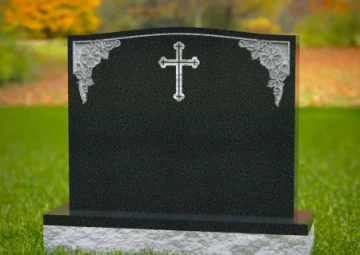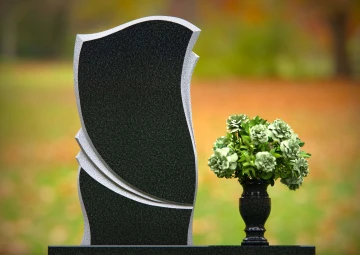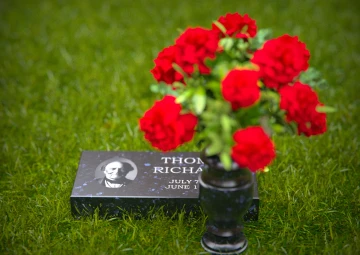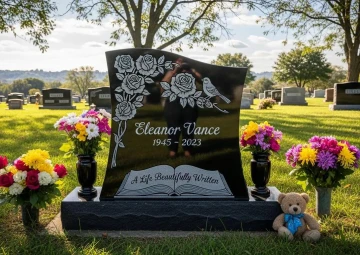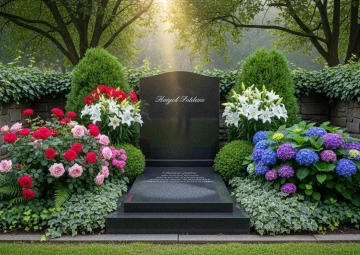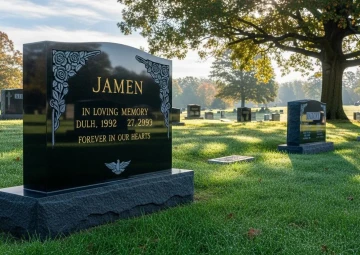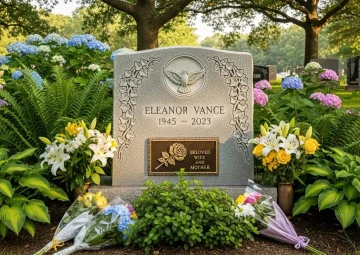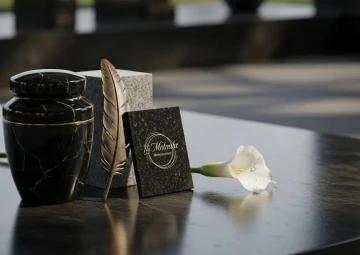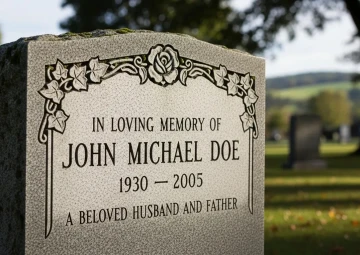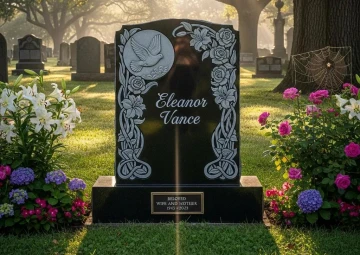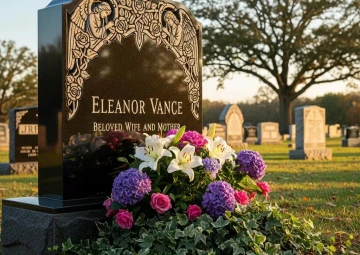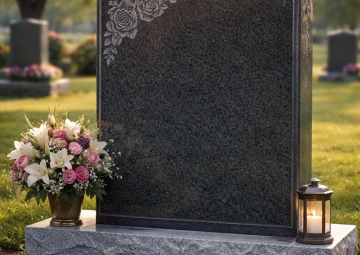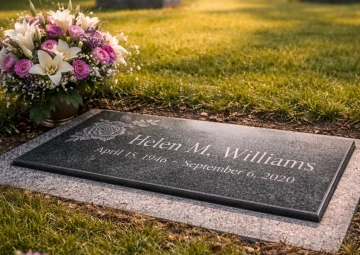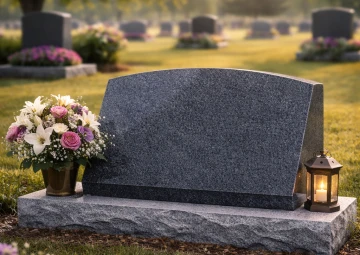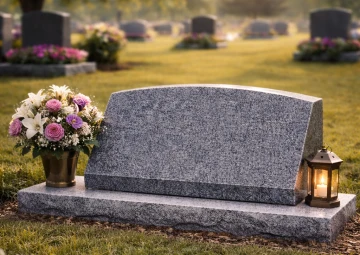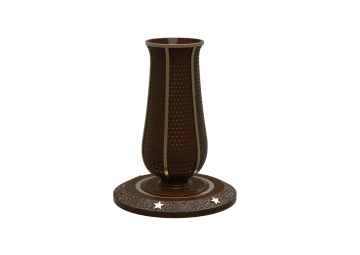
We've noticed something over the years. When families come into the Sacramento showroom and run a hand across a bronze vase mounted against a polished black granite marker - the way a lot of memorial combinations are displayed - they pause. It's the warmth. Bronze doesn't have the cold shock of stone when your palm touches it for the first time. The metal headstone has real physical weight and in outdoor light it deepens rather than washes out, the surface taking on a quality almost like wood grain in its responsiveness to the angle of the sun. That feeling makes a difference at the graveside. It's why bronze headstones for graves have been in consistent use in American memorial tradition for well over a century and a half - even as materials and production methods changed dramatically around them.
The history of bronze tombstones runs through military cemeteries, national monuments, and civil architecture. The first standardized bronze grave markers were produced for veterans of Civil War in the 1870s for national cemeteries and persists till today. Bronze was chosen then for permanence, for legibility through all weather, for the dignity the material communicates. Headstones bronze - whether full cast-bronze memorials or granite stones carrying bronze accents - carry that same intention forward. Families don't choose bronze because it's fashionable. They choose it because it says something about the care that was taken, and about how long that care is meant to last.
Why Bronze Headstones for Graves so Durable
Bronze is a copper-tin alloy that develops an oxide layer over time - what most people call a patina. That patina is protective. It slows further corrosion and deepens the surface color from bright amber-gold toward a warmer, richer brown-green that most people find more beautiful than the original finish. Well-maintained bronze headstones for graves remain legible and structurally intact across centuries. That's not an exaggeration. Bronze memorial tablets in European churches remain readable after 500 years outdoors. In older American cemeteries, bronze flat markers from the 1890s sit clear and solid while nearby marble monuments have dissolved at their edges.
A dark and aged bronze headstone set in cemetery grass, patinated to the warm tones that time produces, has a rightness to it - an earned quality that synthetic materials don't reach. You can feel it when you stand in front of one. We hear that from families regularly, and to me it captures something real about why the material matters in this context specifically.
White bronze headstones are a related but distinct category cause despite the name, they're actually cast from a zinc alloy rather than true copper-tin bronze. Their appearance is closer to silver-grey, the surface harder, and they don't develop the same warm amber-green patina. They were produced widely in the late 19th and early 20th century - you'll find them in older sections of cemeteries in the South and Midwest - but the visual effect is different. Cooler. More architectural. Some families specifically want that aesthetic; most, when they see both, choose the warmer material.
What Bronze Headstones Include
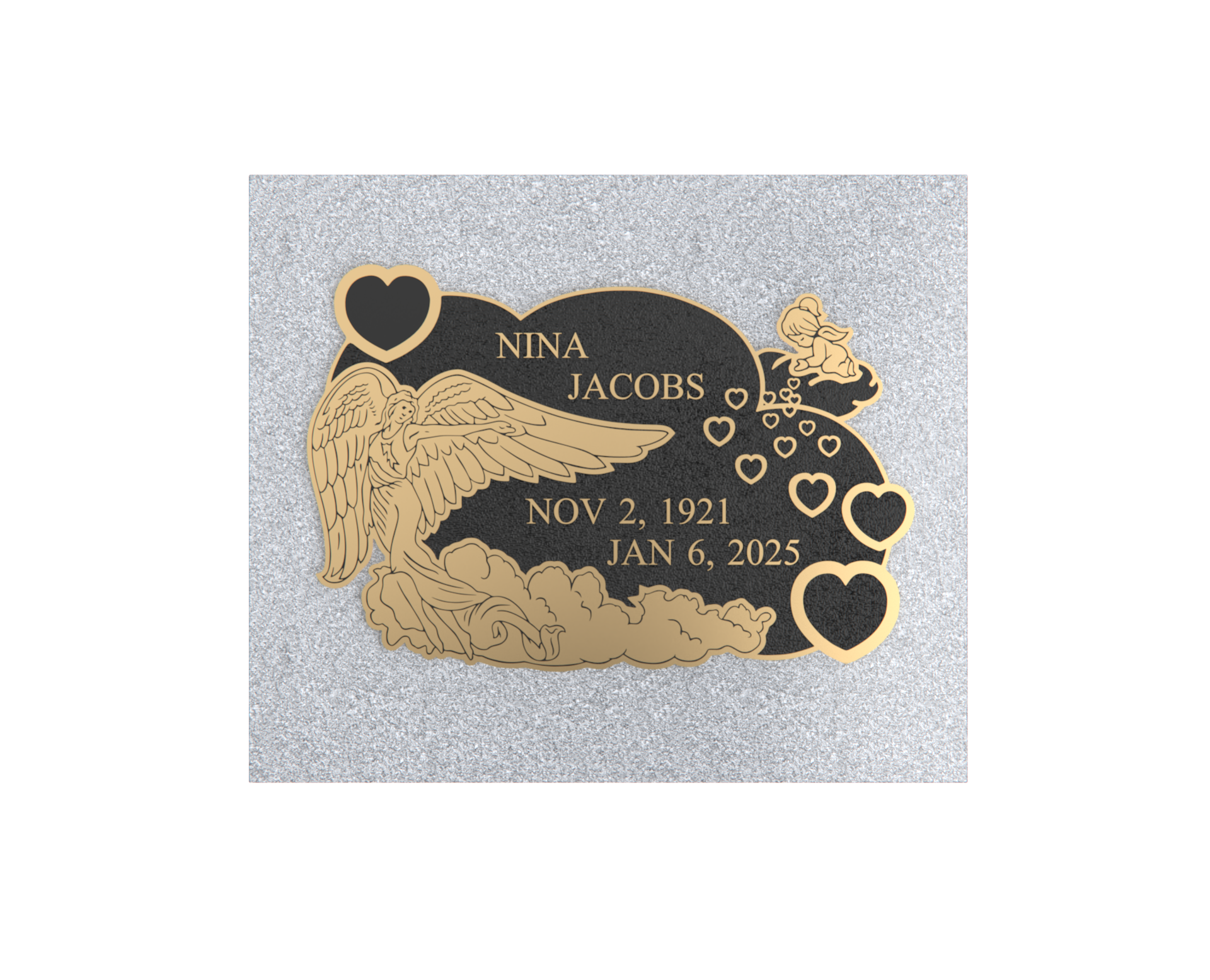
A bronze headstone isn't always a single piece of metal. Most modern bronze memorials are built as combinations, a granite base carrying the structural weight and offering weather resistance, then added bronze handling the letterforms, also the portrait medallion and the ornamental details. Together they do something neither achieves alone.
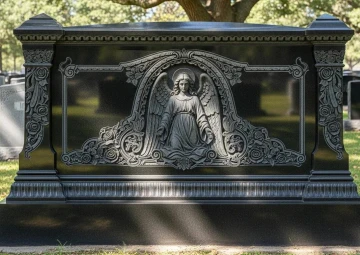
Full cast-bronze memorials - where all inscriptions and imagery are raised from the metal surface in three dimensions - carry a different physical quality than anything granite offers. Running a thumb across a name in cast bronze feels different from reading it in engraved stone. The letterforms have depth. In raking light, from the side, you can see shadow falling into the recesses of the text. That tactile, dimensional quality is what families who choose a full bronze headstone are paying for, and it's something the finished piece communicates even from a distance.
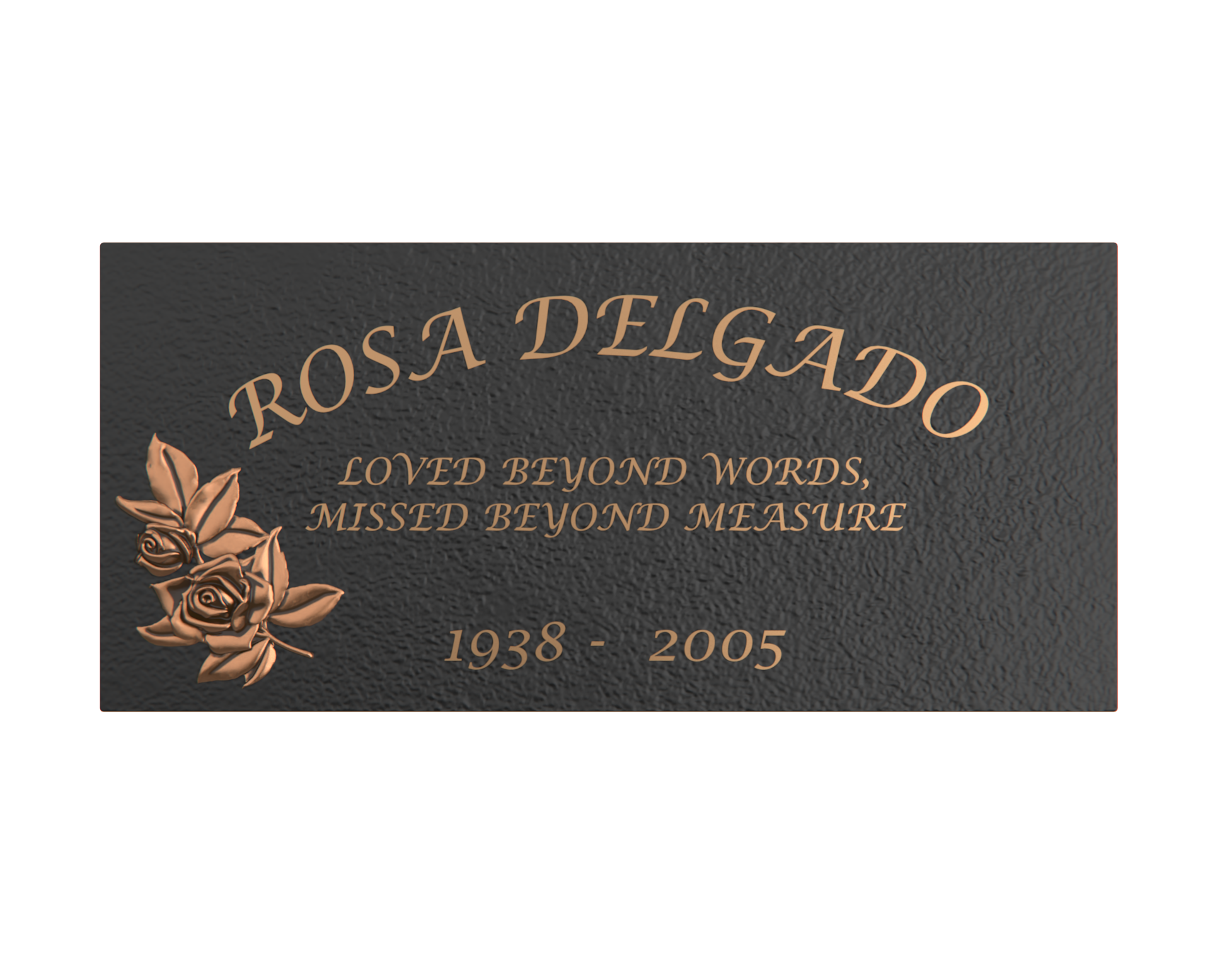
Bronze plaques for headstones are the more common approach - a cast-bronze plaque with all inscriptions and imagery, mounted against a polished granite face or base. The plaque is typically secured with epoxy adhesive and stainless fasteners. The combination of Indian Black Premium granite base with a warm bronze plaque face produces maximum contrast and visual weight. We've placed this combination in cemetery sections across Houston, Tulsa, the Oklahoma City metro, and our California locations - the look is consistently striking in ways that either material alone doesn't achieve.
Bronze Headstones - the Combination That Most Families Choose
Bronze headstones paired with granite are, genuinely, the most visually sophisticated memorial option in the monument industry. The granite provides the structural foundation and the large-format surface; bronze provides warmth, three-dimensionality, and a color character that photographs and ages differently than stone.
Bronze headstones used as flat plaque memorials mounted on polished granite bases are standard in many Catholic and Jewish cemetery sections across California, Texas, and Oklahoma. The plaque is cast with all text and imagery, anchored to a cut base, and set flush or slightly elevated from the ground. In cemetery sections with height restrictions - where an upright granite monument wouldn't be permitted - a flat bronze plaque on a low granite base is often exactly within the allowable limits.
Bronze headstones as full upright tablets - where the tablet itself is cast bronze rather than engraved granite - appear less frequently, and the production process is more demanding. Cast bronze can't be corrected after production the way engraved stone can; a design error in bronze requires recasting. The design approval process for that type of memorial is consequently more careful and more involved. We handle full cast-bronze upright production through Legacy Bronze, the premium bronze division within the same family of brands, which specializes in art-level bronze plaques, statues, nameplates, and memorial ensembles.
A Bronze Vase for Headstone - the Detail Families Remember Most
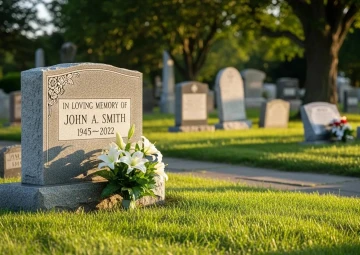
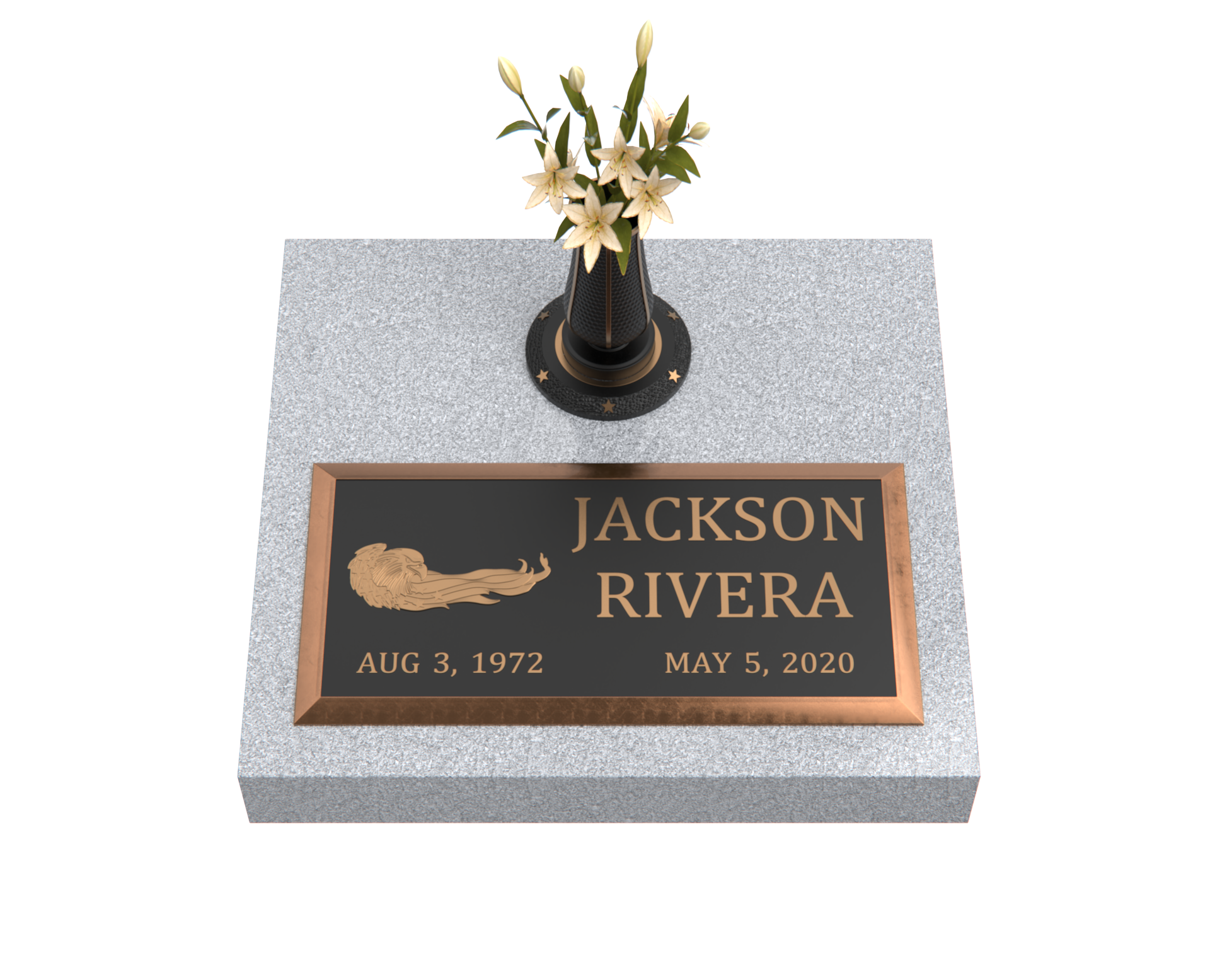
Of all the bronze elements we add to granite memorials, the bronze vase for headstone placement generates the most consistent response from families after installation. They remember it specifically. Not just as a practical object - as the holder for the flowers - but as the piece that makes the memorial feel visited and alive.
A bronze vase for headstone is a cast bronze cylinder fitted with a removable plastic liner for protection metal from organic staining, what makes changing fresh flowers straightforward. It's anchored to the granite face or base, either with a bracket mount or set directly into a prepared hole. When a family arrives and places flowers, it changes the whole feeling of the grave from a static stone object into something that clearly has people returning to it. One family at the Tulsa location described it plainly: the flowers in the bronze vase were the first thing anyone stopped to notice.
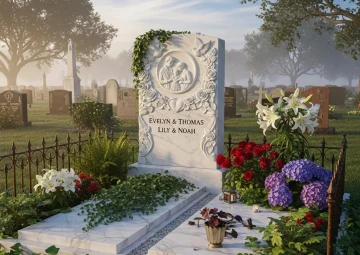
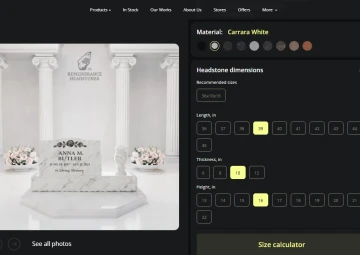
Our product pages include a bronze vase for headstone add-on in the configurator for most granite memorial pieces. Families can see the vase placement in the 3D preview before any production begins - exactly how it sits against the face of the stone, what proportion it carries relative to the overall memorial. Companion headstones for two often include a symmetrical pair of vase fixtures, one on each side. The visual balance in the 3D render is compelling; the physical combination at the grave is better still.
Headstones Bronze - Maintenance, Patina, and What Changes Over Time
Headstones bronze as a material category requires some maintenance that granite doesn't. The natural patina process is generally desirable - most families want the aged warm bronze appearance rather than the bright amber of freshly polished metal. But left completely unmanaged, that patina can develop unevenly, going darker in areas of moisture accumulation and staying lighter elsewhere. A light cleaning and occasional application of a protective paste wax keeps the surface developing uniformly rather than patching.
Bronze date plates for headstone faces - smaller cast elements carrying the birth and death dates, mounted against an engraved granite background - are particularly subject to this kind of differential weathering because of their small surface area and exposure from multiple sides. We recommend annual cleaning for these components at minimum.
Our StoneCare service program, available as an add-on, covers maintenance for memorials with bronze elements across our California locations in Sacramento, Carmichael, Glendale, and Hesperia, the Houston Texas location, and the Tulsa and Edmond Oklahoma showrooms. Service frequencies run from every two months to annually. Bronze emblems for headstones - the small decorative medallions depicting military branch insignia, religious symbols, or fraternal emblems - are included in that maintenance scope when present. They're cast separately and mounted to the granite face; they need the same light periodic cleaning as any other exposed bronze element.
Bronze Headstone with Pictures - What's Possible and What Families Choose
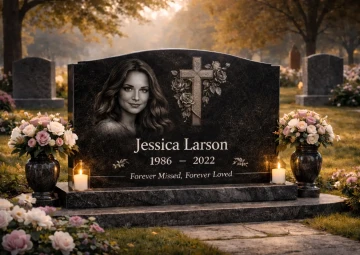
A bronze headstone with pictures uses one of two methods. The first is a sculptural bas-relief portrait - the image sculpted from a photograph and cast into the metal so that the face literally rises from the surface in three dimensions. In raking side light, you can see actual shadow falling across the features. It's the most physically present way to include a portrait in any memorial medium. The second method is a laser-etched or chemically processed portrait applied to the bronze surface, which produces a tonal image with depth but without the physical relief of a full casting.
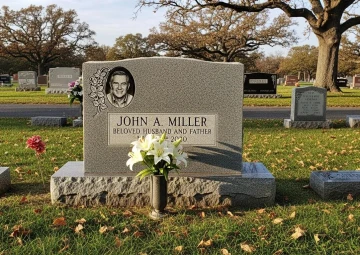
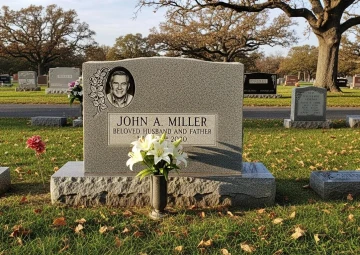
Both approaches differ from the porcelain photo medallion in a bronze surround - a color photograph fired onto porcelain, set into a cast-bronze frame and mounted to the memorial face. The medallion produces a color image rather than a tonal one. It's more accessible in price than a sculptural bas-relief, and families who want the actual appearance - the eyes, the specific coloring - consistently choose it.
A bronze headstone with pictures at the sculptural level requires a high-resolution photograph, clearly lit, provided early in the production timeline. The sculpting and casting process adds significantly to production time. Families working through this with our design team are walked through image requirements at the beginning of the process, before any design commitment is made, to avoid situations where a cherished but low-resolution photograph can't translate to the technique.
Pricing, Process, Finding Bronze Memorials in Person
Bronze accessory add-ons to granite base headstones prices vary. The base bronze stone models start from $1600 for flat granite markers and from $2240 for upright monuments. Bronze vase add-ons, porcelain medallion portraits, and installation are each separate line items in the configurator. The Luxury all-inclusive package at $3,108 for eligible products includes two complimentary vases - often bronze-style fixtures - alongside professional installation, advanced 3D/AR design rounds, StoneCare for one year, and a personalized QR memorial code.
Full cast-bronze upright headstones are priced based on size and casting complexity and are handled through direct consultation.
Current offers include 20% off with full payment, extended to 25% through May 25. Veterans receive 30% off, first responders 25%. In-house 0% financing runs up to 12 months without a background credit check; Klarna extends to 24 months; pre-need interest-free plans run to 36 months.
Every design - bronze vase placement, plaque position, portrait medallion size and location - is previewed in full 3D before production. The AR tool shows the finished memorial at scale in a real environment on a phone or tablet. That step matters more for bronze than for granite-only memorials, because the warm color of the metal changes the visual character of the whole piece in ways that are genuinely difficult to imagine without seeing them rendered.
Visiting in person shows these materials at their most honest. Remembrance Headstones has 14 showroom locations across 8 states. In California: Sacramento, Carmichael, Glendale, and Hesperia. In Texas: Houston. In Oklahoma: Tulsa and Edmond. After-hours appointments are available at all of them.
FAQ
What are bronze headstones for graves actually made from?
Standard bronze grave memorials are cast from a copper-tin alloy. The casting process produces three-dimensional letterforms and imagery raised from the surface. Bronze is also used as an accent material on granite memorials - vases, plaques, date plates, and emblems - rather than as the full memorial surface.
How long do bronze headstones last compared to granite?
Both materials are extremely durable outdoors. Bronze develops a protective patina over time that slows further corrosion - well-maintained bronze headstones for graves can remain readable and structurally sound for well over a century. Granite doesn't require the same maintenance but doesn't develop the warm patina character that aged bronze does.
What is the difference between standard bronze and white bronze headstones?
White bronze headstones are cast from a zinc alloy, not true copper-tin bronze, despite the name. They have a cooler silver-grey color and a harder surface that doesn't develop the same warm amber-to-green patina. They were produced widely from the 1870s through the early 20th century. Standard bronze is warmer in color and patinas more distinctively over time.
Can I add a bronze vase for headstone placement to an existing memorial?
In most cases, yes. A bronze vase for headstone installation can typically be added to an existing granite memorial - the anchor is set into a drilled hole in the stone or base and secured with epoxy. Cemetery approval is required at some locations. Our team handles this coordination as part of the installation process.
What does a bronze headstone with pictures require?
A bronze headstone with pictures uses either a sculptural bas-relief portrait cast into the metal, a laser-etched or chemically processed portrait on the bronze surface, or a porcelain photo medallion in a bronze frame. All three require a high-resolution photograph. The sculptural bas-relief takes the longest to produce but creates a three-dimensional portrait with genuine physical depth. The porcelain medallion produces a color image.
Which cities have Remembrance Headstones showrooms where I can see bronze memorials in person?
Showrooms are located in Sacramento, Carmichael, Glendale, and Hesperia in California; Houston in Texas; and Tulsa and Edmond in Oklahoma, among other locations - 14 stores across 8 states in total. All locations carry representative granite and bronze combination pieces. After-hours visits are available by appointment.