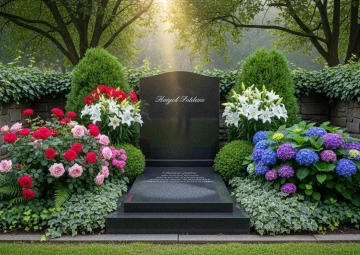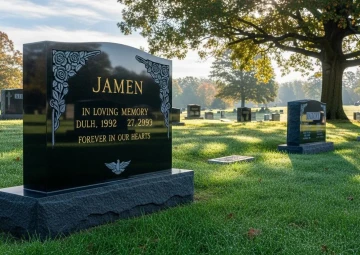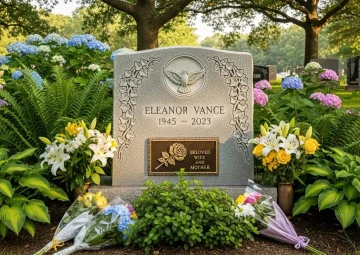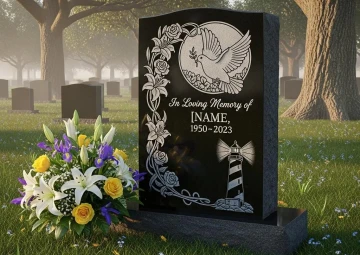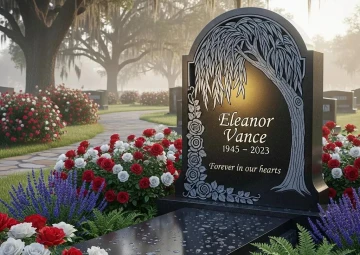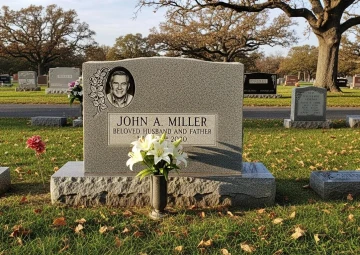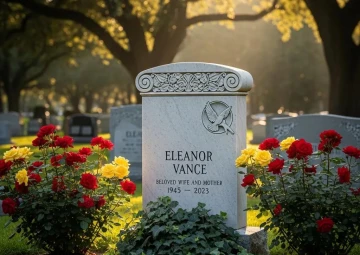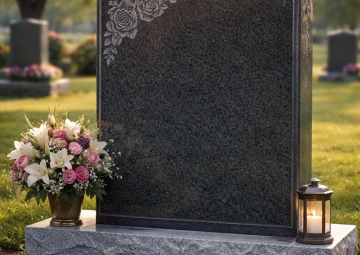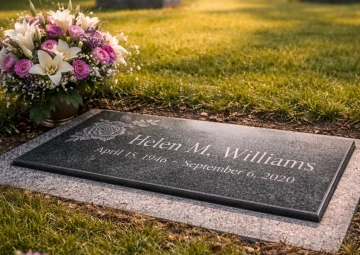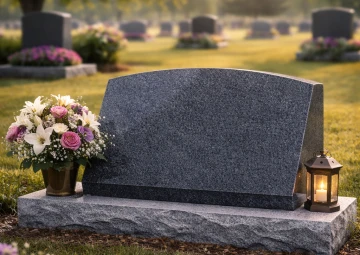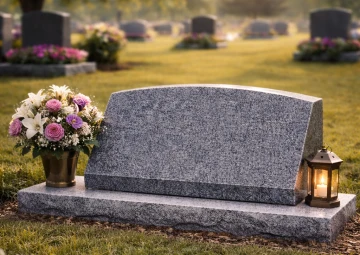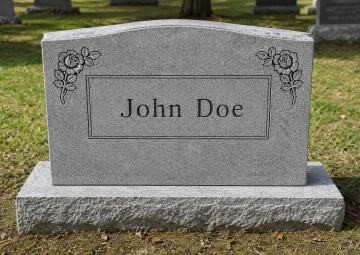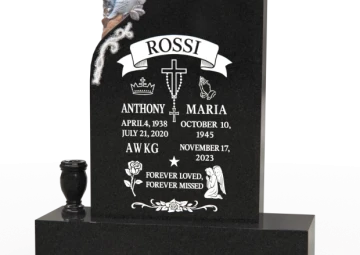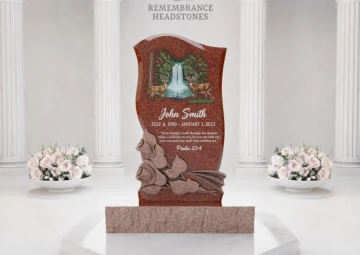
A family came into our Houston studio last spring with a full typed page. It was beautiful - a eulogy, really, everything their father had been, single-spaced. An hour later they left with seven words, and everyone in the room, including the designer who had gently held the eraser, agreed the seven words said more than the page had. That hour is the least discussed craft in the memorial trade and possibly its most important one: epitaphs for headstones are not written so much as distilled, and the distilling is a skill a good studio brings to the table the way it brings granite samples. This article is about that skill - where the form comes from, how a line meets stone, the wit question handled honestly, and what actually happens in the editing session where a paragraph becomes an inscription.
Remembrance Headstones helps compose final lines weekly across fourteen locations in eight states, in English, Spanish, Hebrew, and Cyrillic, on everything from flush markers to estate monuments. The words belong to the families. The distilling is the studio's craft. Here is how it works.
The Oldest Literary Form Still in Production
Perspective first, because families composing an epitaph are joining a longer line than they realize. The form is older than the novel, older than the sonnet, older than nearly everything else people still write: the Greeks gave it its name and carved farewells above their dead millennia ago, and Roman roadside tombs addressed passing travelers directly, asking them to pause a moment and read - which is, when you think about it, exactly what every epitaph since has asked. The great churchyard inscriptions of England and colonial America carried the tradition into our own cemeteries, where the oldest sections still speak in it: warnings, blessings, boasts, jokes, and tenderness, all compressed to fit a stone.
Two things about that lineage matter at the consultation table. The first is permission - the tradition contains every register from solemn to sly, so no family should feel the form demands a tone their person never had. The second is the standard: epitaphs survive by compression. The lines still being read after two centuries are short, specific, and rhythmic, and the ones that tried to say everything have weathered into paragraphs nobody finishes. The form has been running this experiment for a very long time. The results are in, and they favor seven words over seventy.
Headstone Epitaphs and the Discipline of the Line
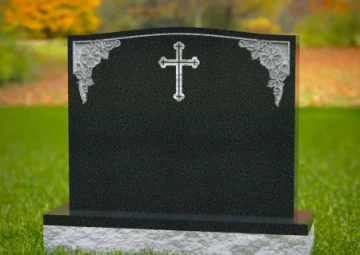
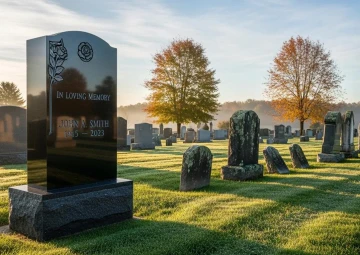
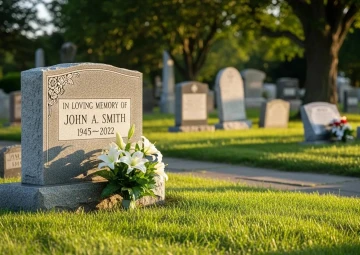
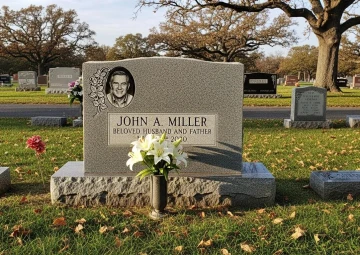
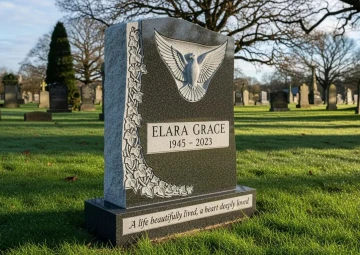
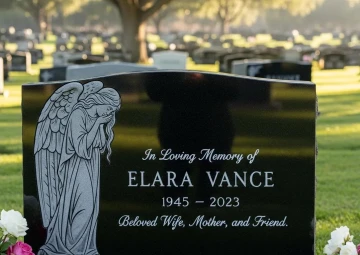
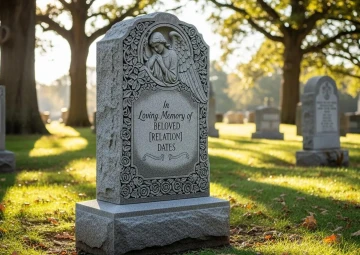
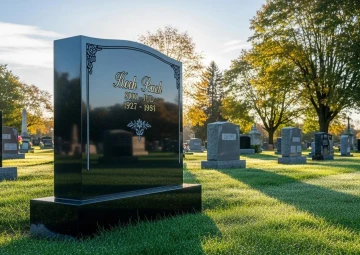
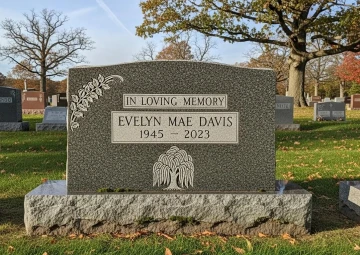
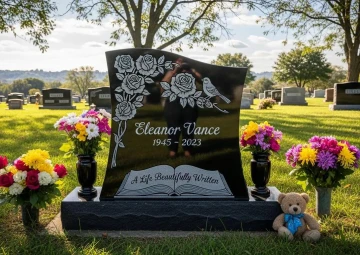
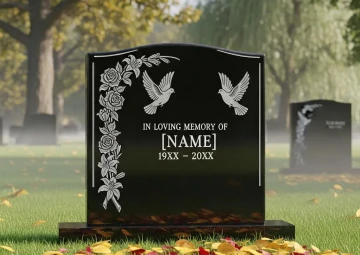
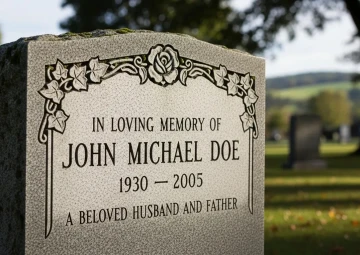
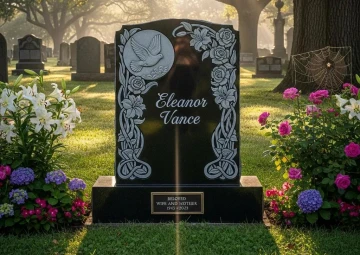
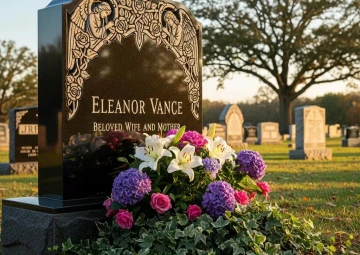
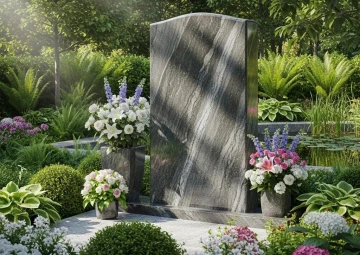
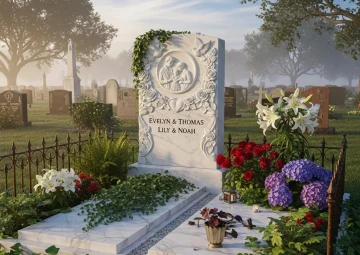
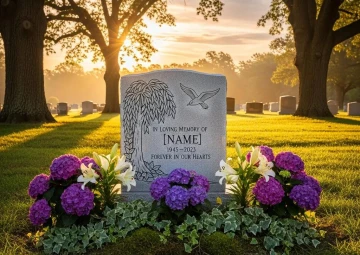
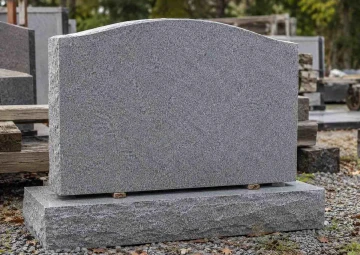
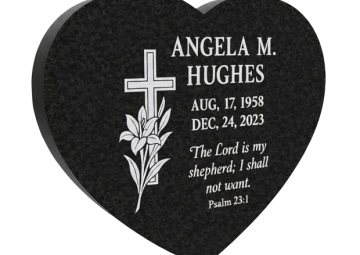
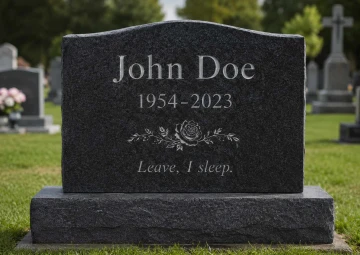
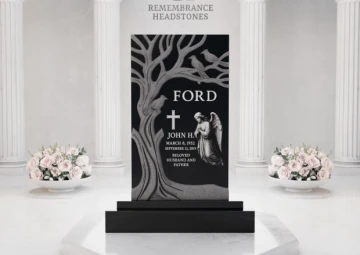
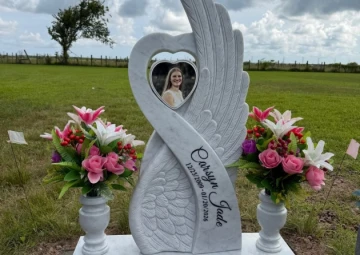
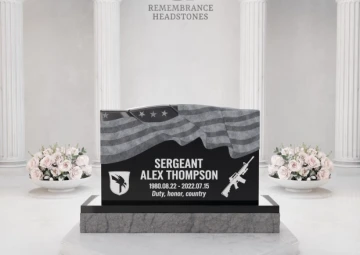
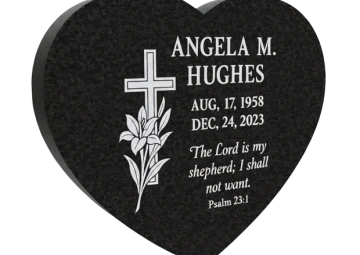
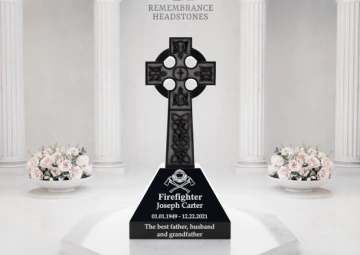
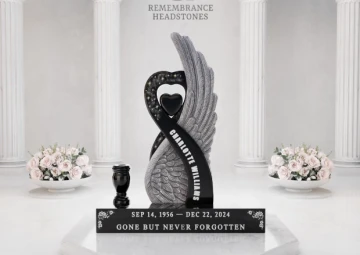
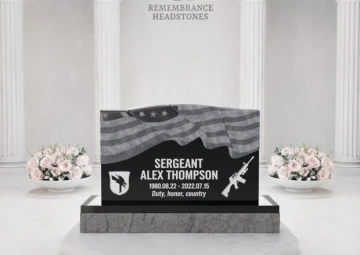
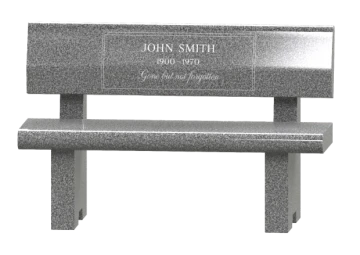
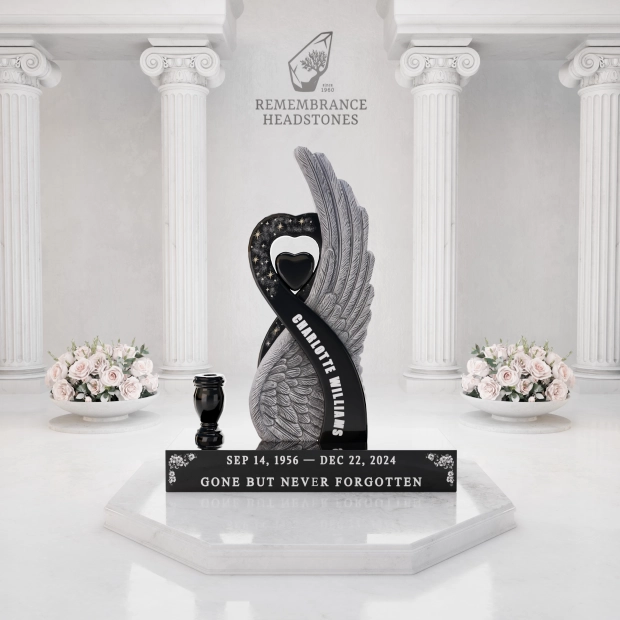
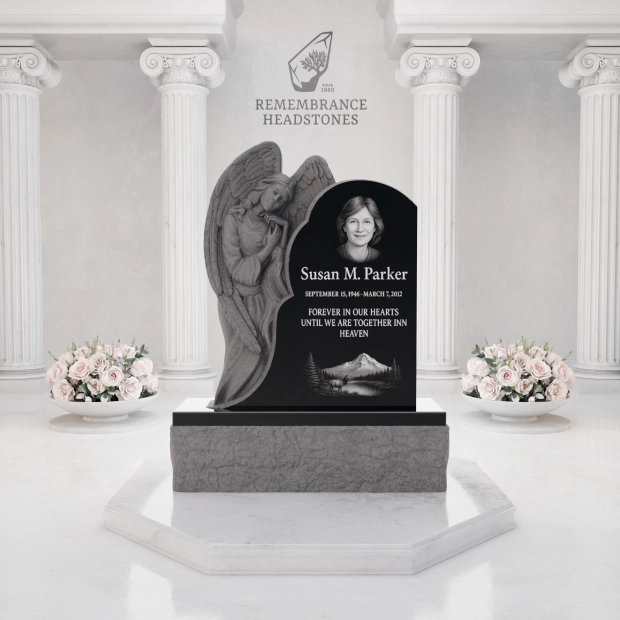
Now the craft where words meet granite, because headstone epitaphs live under physical laws no other writing does. A line must fit the stone at a size the eye can read from standing distance, which means the monument's width sets a real budget - and the letterer's counsel is to spend it on fewer, larger words rather than more, smaller ones, since an epitaph nobody can read from the path is a secret, not an inscription. Placement carries meaning too: the line beneath the name speaks about the person, the line arched above speaks over them like a blessing, and the line along the base speaks to the visitor, the old Roman address revived.
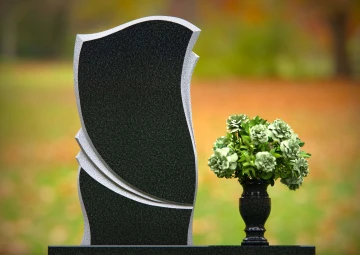
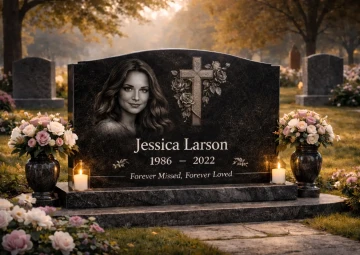
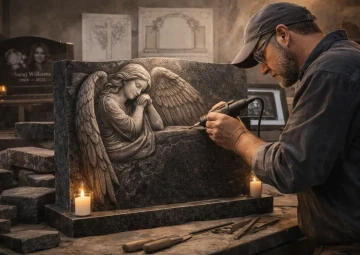
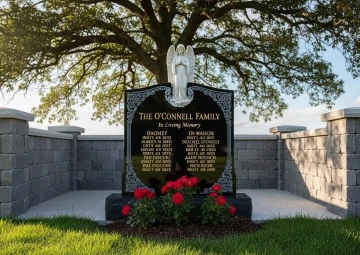
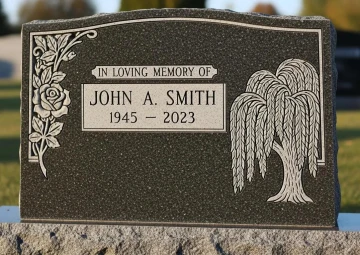
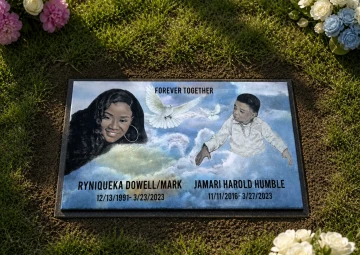
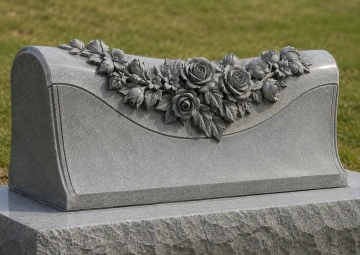
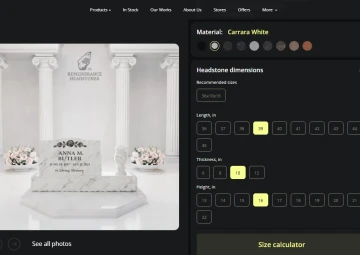
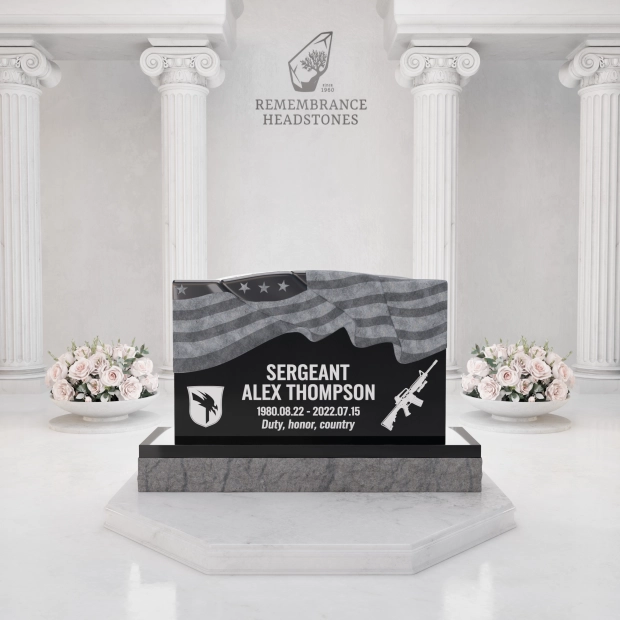
The cutting method finishes the thought. Headstone epitaphs in deep V-sunk letters carry the traditional gravity; frosted panels give a longer line bookish evenness; raised letters make a short phrase monumental; and gold leaf turns the epitaph into the stone's light source, a treatment our estate and Orthodox commissions use for exactly the lines that deserve it. The same seven words read differently in each, and the 3D preview shows all of it with the family's actual line before anything is decided. Words are the one element on a monument the family authors entirely. The studio's job is to make sure the granite performs them well.
The Editing Session Where a Paragraph Becomes an Epitaph
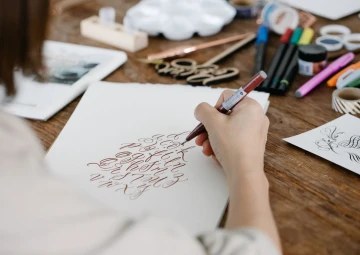
Here is the hour from the opening, described so families can arrive ready for it - or run it themselves at the kitchen table. The designer reads the family's draft aloud once, fully, because the long version deserves its hearing and because hearing it locates the line: somewhere in every eulogy there is a sentence the room goes quiet at, and that sentence is usually the epitaph wearing extra clothes. Then the questions that do the distilling. Which of these words would he have actually said? What does the family already repeat - at dinners, in texts, at the funeral itself? If the stone could only hold five words, which five? Strike everything the name and dates already say; the epitaph should never spend its budget on facts the stone states elsewhere.
What survives that hour is nearly always something the family recognizes rather than invents - a phrase that was already theirs, trimmed to its bones. He never met a stranger. Loved much, worried more. Home is wherever she was. The proof's two free revisions exist substantially for this process, and the studio's standing advice is to sleep on the final line twice before signing, because an epitaph is the one piece of writing its authors cannot revise later. Slept-on lines get approved with a calm that first-draft lines never have. The granite can tell the difference, or at least the family always can.
Sample Epitaphs for Headstones Used as Calibration Rather Than Catalog
A word about samples, because families ask for them and the studio uses them differently than the trade's brochures do. Sample epitaphs for headstones work poorly as a shopping list - a line chosen from a catalog fits a person the way a stranger's coat fits, roughly and recognizably borrowed - but they work beautifully as calibration, showing the range of registers so a family can hear where their person lives on it. So the consultation offers a spread deliberately wide: the devotional register, a verse or Well done, good and faithful servant. The plainspoken, He kept his word. The tender, Our best chapter. The wry, Told you I was right. Families listen, laugh or nod at one register, and the writing session then happens inside it with their own material.
That is the entire proper use of samples: not which line, but which voice. The line itself should come from the life, through the editing hour, and the studio has never once seen a family regret doing it the long way. The borrowed coat gets worn. The tailored one gets remembered.
Examples of Epitaphs on Headstones From the Old Sections
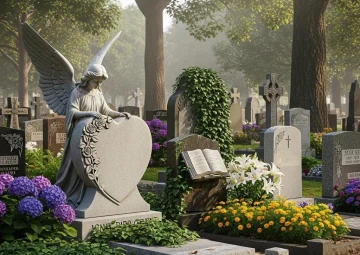
The tradition teaches by example, so a short walk through examples of epitaphs on headstones that history has already stress-tested - paraphrased here, since the old lines belong to their stones. Colonial New England markers favored the memento mori address, reminding the passing reader that they, too, were mortal - stern, effective, and still stopping visitors today. The Victorians answered with tenderness: sleep formulations, reunion promises, the beloved-of-everyone formulas that read as a century's worth of softening grief. Trade epitaphs flourished alongside - the printer whose stone describes him as a worn edition awaiting reissue, the sea captains logged as arrived at last in port - wit and faith sharing one line, which the old carvers saw no contradiction in.
Writers and public figures left famous instructions for their own stones - a curse against disturbing the bones, a verdict that a whole life had been spent getting ready, a single word of thanks - and the pattern across all of them is the one this article keeps finding: brevity, specificity, and a voice the reader can hear. Walk your own cemetery's oldest section with that checklist once. It is the best epitaph-writing course available anywhere, it is free, and the instructors have been holding office hours for two hundred years.
Funny Headstone Epitaphs and Humorous Headstone Epitaphs That Age Well
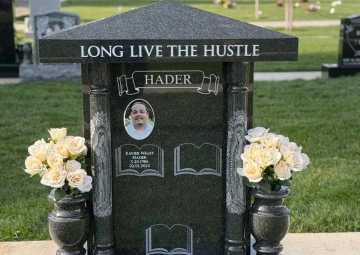
The humor question, taken seriously, because it deserves better than the listicles give it. Funny headstone epitaphs are legitimate memorial tradition - the trade has carried wit on stone for centuries - and for a person whose humor was their signature, a solemn line would be the inaccurate one. The craft standard is aging: humorous headstone epitaphs must be funny at the funeral, funny at the tenth anniversary visit, and funny to a grandchild who never met the author, which rules out topical jokes, inside references that will orphan, and anything whose punchline is the death itself rather than the life. What ages well is voice - the phrase the person genuinely, repeatedly said - and gentle self-deputized wit: the gardener's stone promising she is composting, the fisherman's final measurements etched as one last exaggeration.
The humorous epitaphs headstones carry best in this studio's files share one more trait: warmth under the joke. The line makes visitors smile and then, a beat later, miss the person, in that order, and the second beat is what separates wit from a bumper sticker. When a family's draft has both beats, the studio cuts it with complete confidence. Funny headstones epitaphs built on voice and warmth become the stones whole sections are known by, visited by strangers, photographed kindly - which is, for a certain kind of person, precisely the afterlife they would have ordered.
Funny Epitaphs for Headstones and the Permission Question
One practical chapter completes the humor discussion. Funny epitaphs for headstones raise a consent question solemn ones never do: who decided the joke was welcome? The clean answers are two. The person decided - pre-need commissions where the author approves their own line remove every doubt, and the wittiest inscriptions in our files were, unsurprisingly, self-written. Or the family decides unanimously - because a joke one sibling loves and another cannot bear becomes a permanent argument at the worst address for one, and the studio has learned to ask the whole-family question gently before cutting any line that plays. A night's sleep and one round-robin phone call have saved more than one inscription.
Cemetery review adds a formality in some religious grounds, where inscriptions pass an office before production - our verification covers it, as it covers everything - though the grounds reject far less than families fear. The gatekeeper that matters is the family's own future self, thirty years out, reading the line on an ordinary Tuesday. Write for that reader, and the funny line earns its granite exactly as honestly as the psalm does.
Epitaphs Across Languages and Traditions
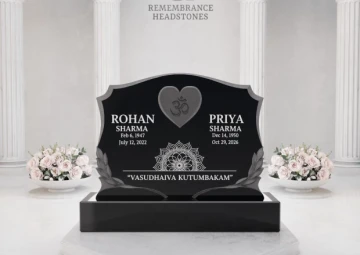
The multilingual chapter, because a final line speaks truest in the language the person prayed and joked in. This studio sets epitaphs in Spanish weekly across our Texas, California, and Florida regions; in Hebrew with the traditional opening and closing abbreviations whose forms are fixed and known; in Cyrillic for the Orthodox families of our Sacramento and Roseland rooms, where the traditional eternal-memory formulation carries the whole tradition in two words; and in Chinese and Vietnamese on the Asian shaped monuments, where generational honorifics do work English cannot. Bilingual epitaphs compose both renderings as one design rather than a line and its footnote, balanced by a designer and reviewed by readers of the script before cutting.
The counsel underneath is the same as everywhere in this article: the right words already exist in the family, in whatever language the family actually spoke them. The studio's job is orthography, balance, and depth of cut. The voice was never ours to supply.
The Line, Cut
The commission close, brief because the article's work is done. Standard inscription including the epitaph is part of every monument's price here; gilded and raised treatments are quoted plainly by the hours in the free proof with its two revisions, and the current terms carry the whole commission - 10% off with full payment, 20% for veterans and 15% for first responders, Klarna and Affirm to 24 months, 0% in-house to 12, pre-need to 36 months interest-free with free storage, and 25% off two or more monuments through July 31. The rooms wait in Sacramento, Los Angeles, Laguna Woods, Hesperia, Houston, Allen, Dickinson, Tulsa, Edmond, Enid, Essington, Tukwila, Roseland, and Orlando, with remote sessions for families everywhere from New York to Kansas.
Bring the typed page. Bring the whole eulogy, honestly - the editing hour needs raw material, and the longer version always contains the shorter one. Somewhere in your page, the room will go quiet at a sentence. That one. Cut deep, sized to read from the path, with fifty years of silence around it. Seven words is usually enough. It was for the family from Houston, and their father, who never used eight where seven would do, would have approved the edit most of all.