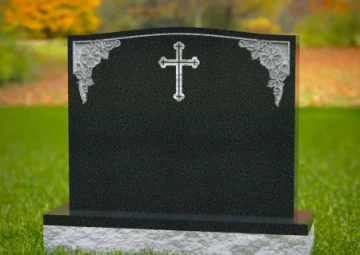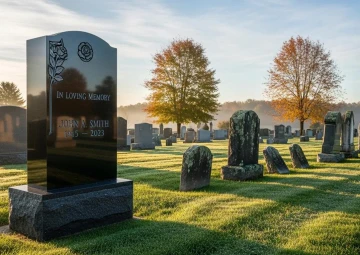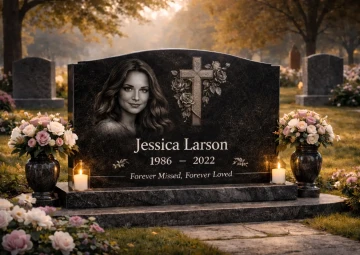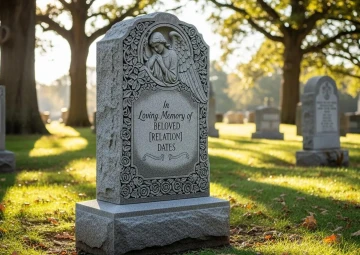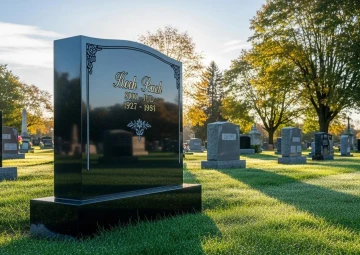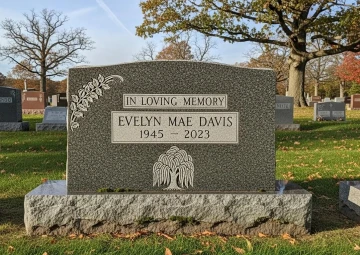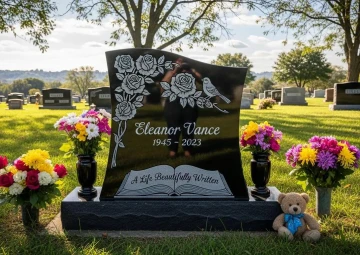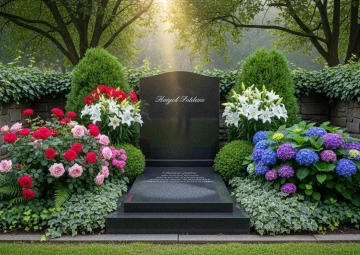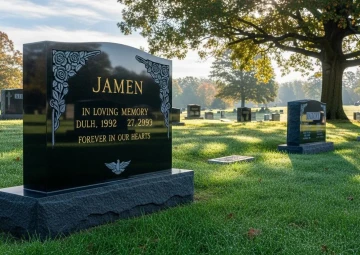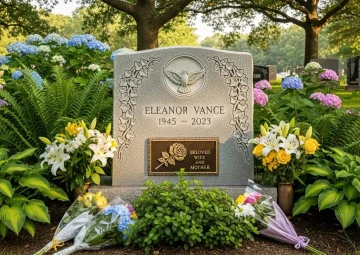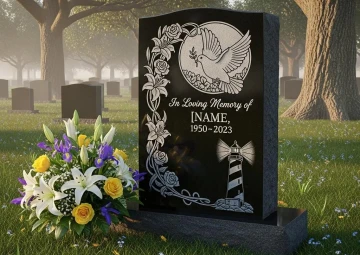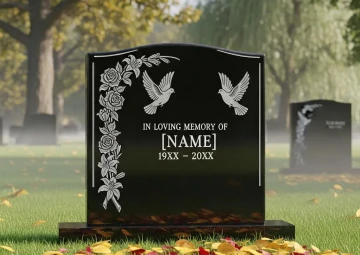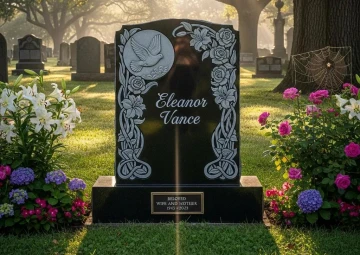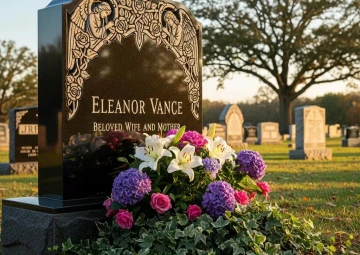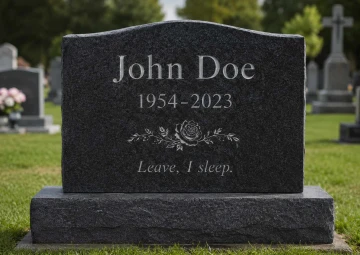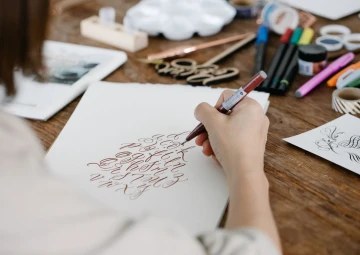
A woman came into our Sacramento showroom last winter holding a napkin. On it, in ballpoint, a rough arch, a cross in one corner, her husband's name in careful block letters, and a wavy line she explained was the American River, where he fished for forty years. She apologized for it twice before sitting down. She shouldn't have. That napkin was a headstone drawing - a real one, the kind our studio works from every week - and eight weeks later its great-grandchild stood in polished black granite with the river etched exactly where her pen had wandered.
This article follows that journey: what happens to a drawing after a family hands it over. Most writing about memorial sketches stops at the sketching. Ours starts there, because Remembrance Headstones runs the design work in-house across fourteen locations in eight states, and the distance between a ballpoint napkin and a two-hundred-year stone is a craft with real stages - studio interpretation, scale drafting, the carver's full-size drawing, cemetery approval sheets, and for our sculpture and relief commissions, drawings that become three-dimensional. Knowing the stages changes how you sketch. Mostly, it frees you.
Why Every Monument Begins as a Drawing and Always Has
The drawing precedes the stone by centuries of tradition, not by our preference. Victorian monument makers worked from pattern books - bound volumes of engraved designs families paged through in the parlor - and the great memorial carvers drafted full-size drawings, called cartoons in the old workshop sense, taped to the granite itself so the chisel followed a line a pencil had already argued about and settled. Walk the historic sections around Philadelphia or Columbus and you're looking at drawings, executed. Every urn, every draped column, every Victorian rose began on paper.
The logic hasn't changed because it can't. Granite forgives nothing; paper forgives everything. A drawing is the one stage where a misspelled middle name, a crowded verse, or a cross that sits two inches too high costs a shrug and an eraser instead of a stone. Our studio treats the drawing as the monument's first life, and we keep the working drafts in every client file - partly for the later matching engravings, partly because families ask for copies more often than you'd think. The paper turns out to matter to people. It's the version their own hands touched.
What Happens to Your Sketch Inside the Design Studio
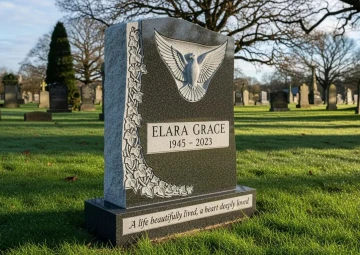
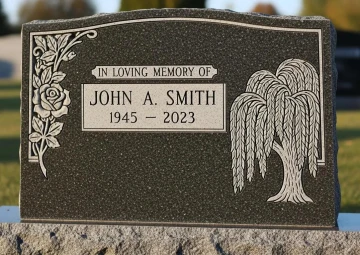
Hand us anything - napkin, notebook page, a photo of a whiteboard - and the same quiet machinery starts. A designer redraws the idea to true scale first, because the single most common gap between a family's sketch and a real monument is proportion: letters drawn at sizes that would be unreadable or enormous, artwork occupying space the inscription needs. The scale draft answers the honest questions early. Then comes composition, where the designer does what the family's sketch was reaching for - balancing the cross against the name block, letting the etched river run where the eye wants it, choosing whether the rose climbs the left margin or anchors the base.
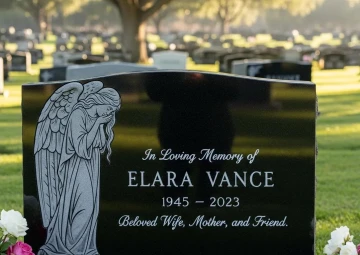
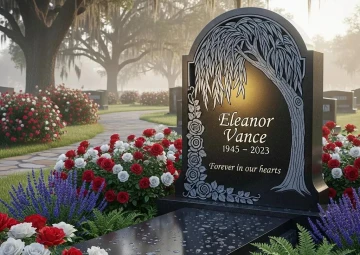
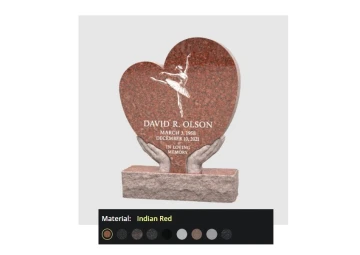
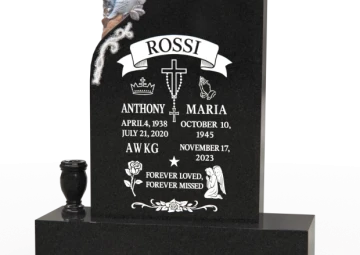
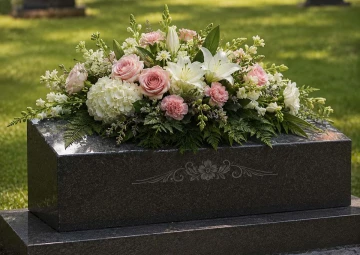
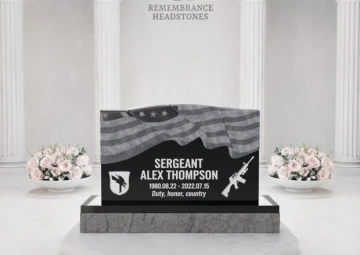
The third pass is granite-specific. A drawing meant for polished black behaves differently than one meant for gray; fine etched detail lives on dark stone and drowns on light, deep carving reverses the equation, and the designer adjusts the drawing to the stone the family is leaning toward - or shows the same drawing rendered on three granites, which settles more debates than any advice could. Nothing in this pipeline requires the family to draw well. It requires them to have noticed things about the person, which the napkin almost always proves they did.
How to Draw a Headstone If You Want to Bring Us Something
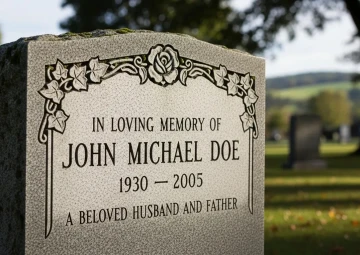
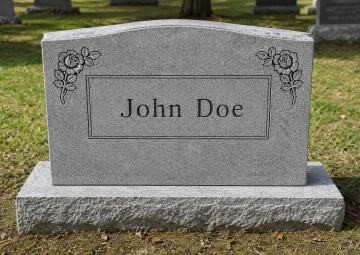
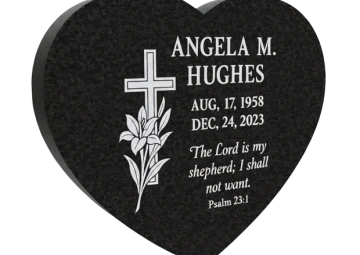
You don't need instructions to hand us an idea, but families ask, so here is how to draw a headstone the way that helps the studio most. Draw the front view only - the flat face, as if standing directly before it - and pick a rough shape: arch, straight top, heart, whatever feels right. Rule a light line down the center; monuments are built around that spine even when the design breaks symmetry on purpose. Write the actual name and dates in the space, at whatever size looks readable to you, because your instinct about size is data we use. Then place the personal elements - cross, portrait, flowers, the boat, the river - as rough shapes with labels. Circles and arrows are a professional language here. "Rose about this big" written next to a scribble tells a designer everything.
Two habits worth borrowing from the studio. Draw the plot's constraints if you know them - many cemeteries cap widths and heights, and a sketch made inside the real box saves a redesign. And date your drawing, sign it, keep it. More than one family has framed the original sketch beside a photo of the finished monument, and the pairing says something about love and craft that neither says alone.
Drawings of Headstones That Came Before Yours
Looking at drawings of headstones from the trade's history is the fastest design education available, and it's why our consultation rooms keep reference books open on the table. The pattern-book pages of the 1880s show compositions still working today: the surname banner, the twin columns, the willow bending over an urn. Carver's shop drawings from the early twentieth century - some preserved in monument industry archives - reveal the discipline under the beauty: every letter height noted, every margin dimensioned, the drawing as a contract between designer and chisel.
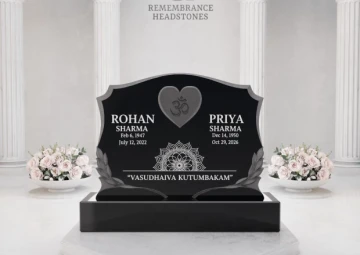
Modern drawings of headstones in our own studio carry the same DNA in digital form: dimensioned elevations, engraving depths specified, the artwork layered so a family can see the stone with and without each element. And the reference stack teaches restraint better than any lecture. Set a cluttered draft beside a century-old drawing that says one name, one rose, one line and families edit themselves, usually smiling while they do it. The old carvers knew what the eye can hold. Their drawings still show it.
When the Drawing Is a Child's and We Engrave It Exactly
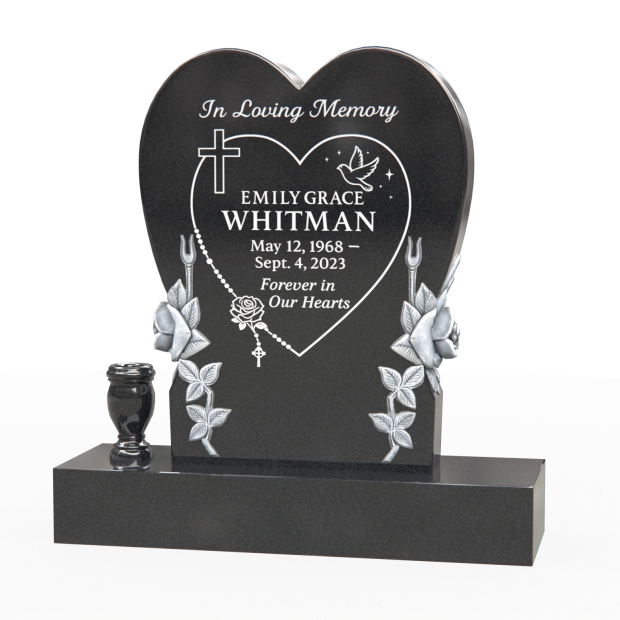
One category of headstone drawing deserves its own room in this article, and we handle it with particular care. Families bring us children's drawings - a granddaughter's picture of Grandpa's tractor, a son's crayon sun, the stick-figure family a little girl drew the summer before her mother died - and ask whether the drawing itself can go on the stone. It can, and when it does, we change almost nothing. The wobble in the line is the point. Our etchers reproduce the drawing stroke for stroke on polished granite, sometimes with the child's signature beneath it, and the result does something no professional artwork achieves: it puts a specific loving hand permanently on the monument.
A grandfather's stone in our Tulsa region carries his grandson's drawing of the two of them fishing, misproportioned boat and all, and his widow told our designer it's the only part of the monument that makes visitors laugh and cry in the same breath. Handwriting works the same way - a signature from an old letter, a recipe card's script, "love you more" exactly as it appeared on forty years of birthday cards. If a drawing or a hand exists, the studio can carry it into stone. Bring the original if you can. Photographs of it work; the original scans better.
Drawings That Become Sculpture and Relief
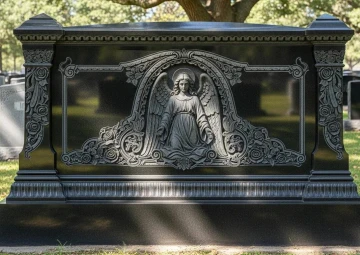
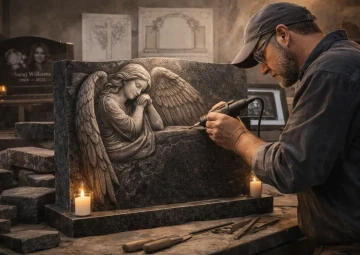
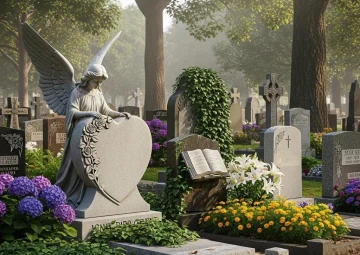
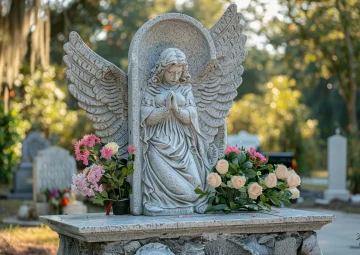
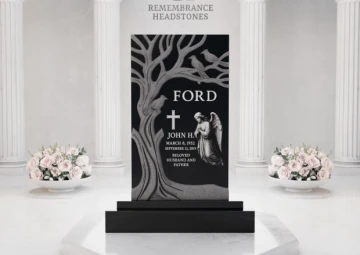
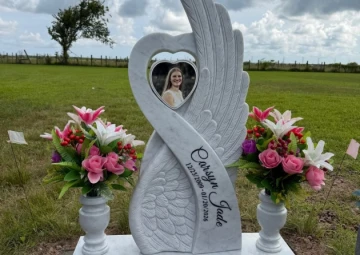
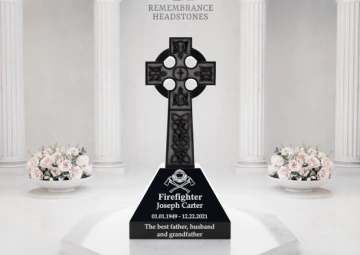
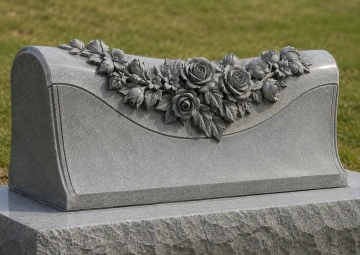
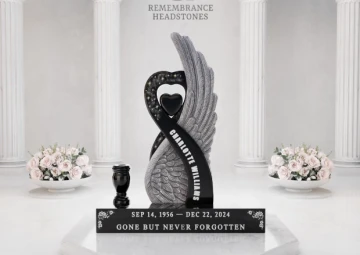
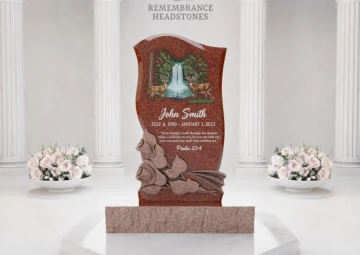
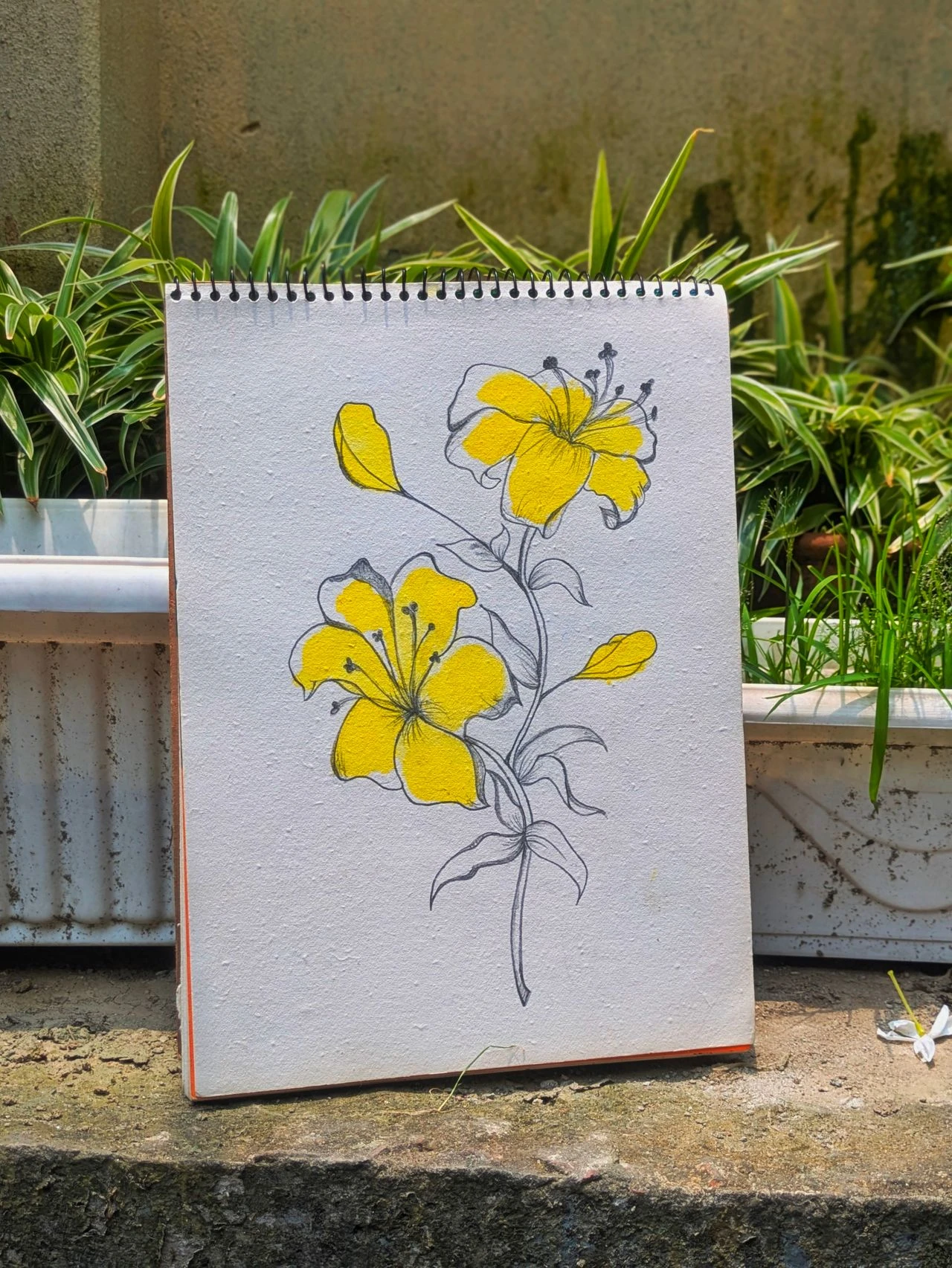
Here the studio's drawing work goes somewhere most memorial companies never follow, because most don't carve dimensionally. Remembrance Headstones produces memorial sculptures, reliefs, and stone carvings - angels in the round, raised roses, portrait reliefs that lift a face out of the granite plane - and dimensional work multiplies the drawing stage rather than skipping it. A relief commission begins with front-view drawings like any monument, then adds depth studies: which petals rise highest, how the drapery folds catch light, where the carving's shadow will fall at morning versus evening. Full sculpture goes further still, drawn from multiple angles before any stone is touched, the way figurative carvers have worked since the trade began.
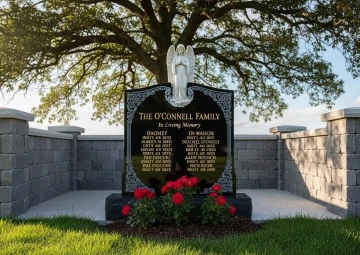
Families commissioning this level of work see the drawings evolve across the consultation - and the drawings are where a sculpture's cost is shaped too, since carving hours follow the pencil's ambitions. Estate projects extend the drafting outward: enclosure and railing layouts, memorial landscaping plans that draw the plantings and stonework as one composition. At this scale the drawing set resembles a small architectural project, which is what a memorial estate honestly is. It all still starts the same way everything in this article starts. Somebody sketches something, and somebody else takes it seriously.
From Approved Drawing to 3D Model to Standing on the Plot
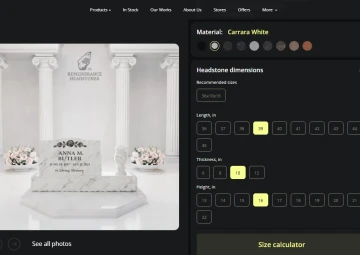
The modern pipeline adds two stages the old carvers would have traded their pattern books for. The approved drawing becomes a 3D model - on our product pages you can build one yourself, configuring shape, granite, fonts, and artwork in real time - and the model becomes an AR preview, the full-size monument standing on the actual plot through your phone. The napkin from Sacramento passed through both: the widow stood in her living room looking at her husband's stone at true scale, walked around it twice, and moved the river three inches lower. On paper she couldn't have known. At full size she knew instantly.
The drawing also does its quietest job at this stage: cemetery approval. Most grounds require a design sheet before installation - dimensions, materials, placement - and our team prepares and submits it as part of every order, translating the family's drawing into the format each cemetery's office expects. Rules verified, paperwork handled, no bureaucracy homework assigned to the grieving. The free professional design comes with two revision rounds, and drawings use them well; nothing proceeds to carving until the family signs the final. Then, and only then, the pencil's work becomes the chisel's.
What the Drawing Costs and What It Protects
The drawing stage costs nothing here - the professional design, the scale drafting, the 3D and AR previews, and the two revisions are free with every monument, because we'd rather spend hours on paper than one minute regretting granite. What the family invests is attention, and the return is protection: the drawing is where spelling is verified against documents, where dates are checked twice, where the verse is read aloud one last time. Every correction it catches is a permanent mistake that never happened.
The purchase itself stays comfortable in the premium range Remembrance Headstones works in: 10% off with full payment, 20% for veterans and 15% for first responders paying in full, Klarna and Affirm financing to 24 months, 0% in-house plans to 12, and pre-need arrangements to 36 months interest-free with free storage and today's pricing locked - useful for anyone sketching their own stone calmly and early, which more people do every year. Through July 31, families ordering two or more monuments with full payment take 25% off, timely for companion and family-plot drawings. And the consultation rooms wait in Sacramento, Los Angeles, Laguna Woods, Hesperia, Houston, Allen, Dickinson, Tulsa, Edmond, Enid, Essington, Tukwila, Roseland, and Orlando, with families in New York, Illinois, Ohio, the Carolinas, Kansas, and Arkansas working remotely through the same studio. Bring the napkin. Apologize for it if you must - everyone does - and then watch what a design studio does with a line drawn by someone who loved the person. That's the whole trade, honestly. The rest is granite.