Some requests stay with us.
One we still talk about in the Edmond, Oklahoma showroom came from a family in the middle of genuine grief who were also, genuinely, laughing. The man they'd lost had told anyone who'd listen, for about thirty years, that when he died he wanted his headstone to read: "Told you I was sick." He'd said it to his doctor. Said it at Thanksgiving. Repeated it at every minor cold and routine checkup for three decades. The family spent the entire appointment trying to keep straight faces while picking a granite color for what was, objectively, a very good joke.
We engraved it. Indian Black. Clean, precise lettering. The family left smiling.
That appointment is not unusual. Funny headstones have a longer history than people generally realize, and the instinct behind choosing one is completely serious even when the inscription isn't. This is about that instinct — where it comes from, what makes a funny epitaph actually work on stone, and how to commission one that's still readable a century from now.
Funny Headstones and Why Humor Belongs in Cemeteries More Than Anyone Admits
The Latin epitaph tradition going back centuries was frequently wry, sharp, and sometimes outright sarcastic. Romans put inscriptions on grave markers complaining about the quality of the roads that brought the mourners, mocking relatives who visited too rarely in life, expressing with some directness what the deceased thought about the living world they'd left behind. Funny headstones are not a modern irreverence. They're an old one — one that virtually every culture that has ever put words on grave markers has participated in, whether the culture later admitted it or not.
In American cemetery culture, humor shows up in 18th-century New England slate markers, in Southern churchyard stones from the 1800s, in California and Texas pioneers' graves. Victorian memorial culture pushed things toward formality and solemnity and held them there for a while. Then the 20th century loosened everything back up. Now families in North Carolina, Pennsylvania, Ohio, and New Jersey request epitaphs that would have genuinely shocked a Victorian monument carver.
People grieve. Then they remember. And sometimes what they remember most clearly is that the person was funny — that laughter was the texture of being in a room with them. A stone that reflects that isn't disrespectful. It's the most honest summary available.
What Makes the Funniest Headstones Actually Land
Specificity. That's it. That's the whole thing.
The funny headstones that make a stranger stop and genuinely laugh, that get photographed and shared, that people stumble across at a cemetery in Nashville, Tennessee or a small churchyard in rural Georgia and can't stop thinking about — they're not generic. They're pinned to one particular person's voice, one running joke, one opinion that got argued at every holiday for fifty years.
"She finally found silence" works when the family knows she talked constantly. "He was right, the service was slow" works when everyone knew he complained about that restaurant specifically. These land because for the people who knew the person, no explanation is needed. For strangers, they suggest an entire personality in a single line. That compression is what makes funniest headstones different from cute ones — they contain a whole person.
Generic humor doesn't hold up. "Gone but not forgotten, the bar tab was enormous" — fine on a birthday card, functionally meaningless on a grave because it could belong to anyone. The funniest headstones are funny the way a family is funny to each other: earned, specific, true.
Funny Headstone Epitaphs — Real Examples and What They Tell Us
We've received funny headstone epitaphs as reference from families who want something in the same territory as a famous example. A few worth knowing, paraphrased rather than quoted exactly.
Mel Blanc's grave in Los Angeles, California reads "That's all, folks" — the sign-off from his career as the voice of Looney Tunes characters. The inscription doesn't need footnotes. It's the most efficient biography possible. Rodney Dangerfield's marker carries a line about still not getting any respect — which functions simultaneously as a joke and a factual career summary. Jack Lemmon's stone in Westwood reads "Jack Lemmon in" — an unfinished billing credit, a setup with no punchline, which is itself the punchline. The visitor stands there working out the grammar, and then it arrives.
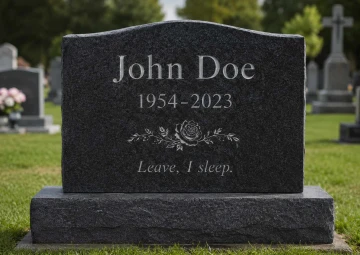
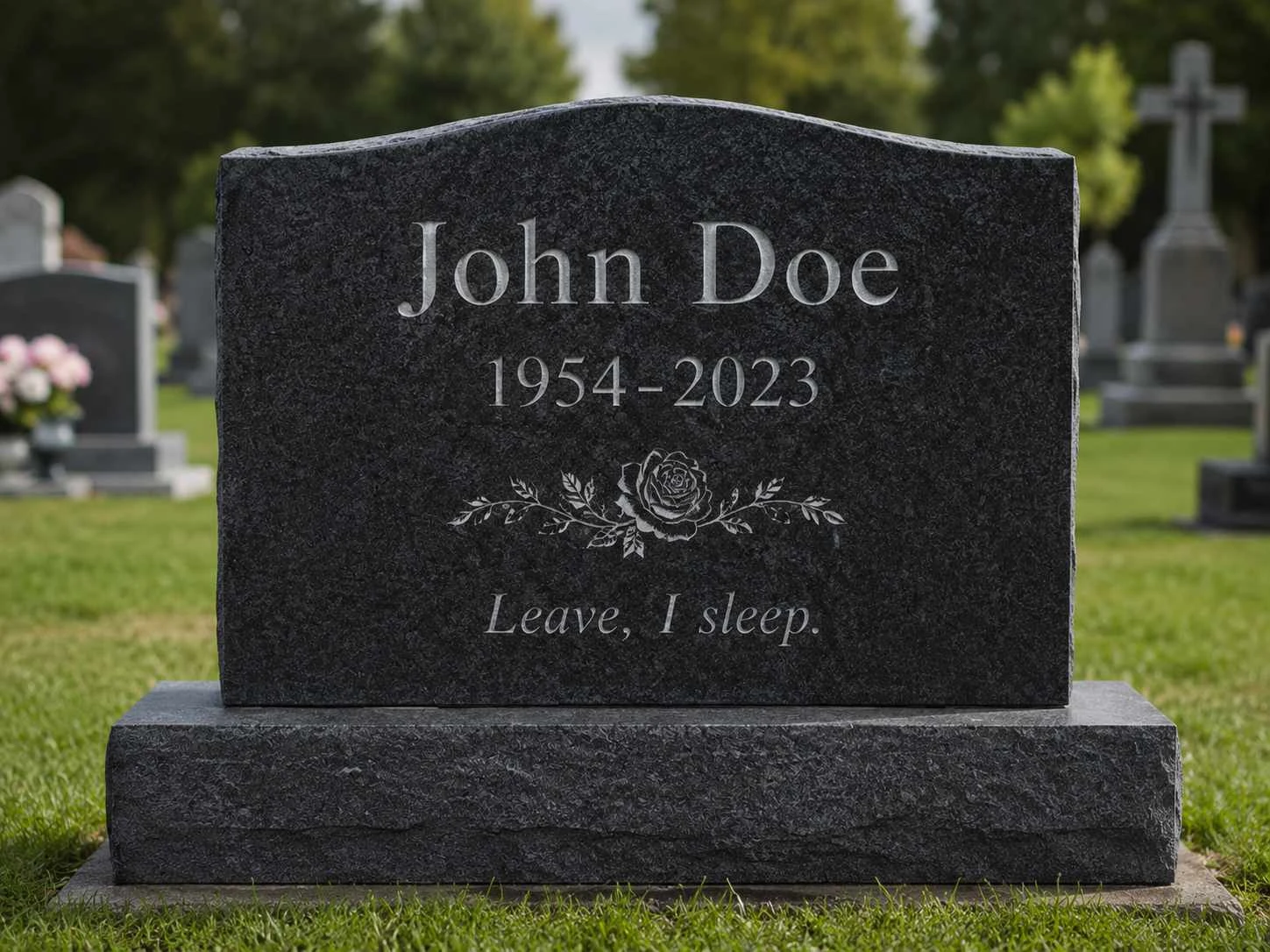
Funny headstone epitaphs that work fall into patterns. The self-aware complaint. The interrupted sentence. The record correction ("I was right"). The mild accusation directed at the survivors ("I wanted a nicer stone"). The instruction ("Do not disturb — still sleeping"). Each of these, to be more than a bumper sticker, needs to carry the specific voice of the specific person. A generic version of any of them is just a pun. A specific version is a memorial.
The funny epitaphs for headstones we produce most successfully always start the same way — a family member saying "she always used to say..." and then the thing. Not someone trying to write a joke. Just the actual thing the person actually said. And then that thing goes in the granite.
Funny Names for Headstones — When the Identity Itself Does the Work
Not every funny headstone relies on the epitaph.
Some of the most striking examples in historical American cemeteries come from the name alone, or from the combination of name and a completely neutral fact that becomes funny in context. "Here lies Will Power — he never did" is a classic that's been circulated for decades. The name turns the inscription. Nothing else is needed.
Funny names for headstones as a category shows up most in folk humor about surnames that interact with occupational titles, common phrases, or simple descriptions. Some examples that circulate are probably invented — too perfectly constructed to be accidental, showing up in too many states simultaneously. But many are documented in historical cemetery surveys and genealogical records. People named Thomas Stone, who became stonemasons. People named Barry. The surname and the circumstance converge.
What this shows, across centuries of documentation, is that people have been treating the combination of name and inscription as a comic canvas since there have been readable grave markers. The funny name for a headstone doesn't require an elaborate setup. Sometimes the name is already there.
Funny Headstone Names — What Families Request More Than the Industry Acknowledges
We see this in Houston, Texas. In Raleigh, North Carolina. In Columbus, Ohio. A family sits down, clearly wanting something light, wanting to honor someone who was genuinely funny, and waits — a little nervously — to see whether they're going to be judged for it.
They're not. Not here.
Funny headstone names — meaning an inscription that incorporates the person's name into a joke, or plays on a lifelong nickname, or references something specific to that person's identity in a way that reads as warm rather than cold — are completely achievable in granite. Any text. The stone doesn't have an opinion about content. What we care about is that the engraving is precise, the letters hold their edges over decades of freeze-thaw weather cycles, and the text is exactly what the family approved in the design proof.
To me, a headstone that makes a visitor smile is one of the more successful memorials we make. It keeps something alive in the person who reads it, in a way that "beloved father, rest in peace" sometimes doesn't — not because that phrase doesn't carry meaning, but because the funny version carries something more specific.
Funniest Headstones That Barely Registered When They Were Set
Some of the funniest headstones in American cemeteries weren't designed to travel.
A grave in Vermont carries a single word: "Why." No explanation. Context lost to time. Another in a small Georgia churchyard reads, close to: "At least he turned off the television." The family put it there because it was true. They weren't thinking about it being photographed and shared decades later.
A flat marker in a Tennessee cemetery reads something very close to: "She made the best pie. Now we starve." Seven words after the name and dates. The person who wrote that clearly loved her, clearly missed the pie, and saw no reason not to say both simultaneously. That's the funniest headstones in the pure sense — not engineered for humor, just specific and true and capable of making a stranger feel the loss of someone they never knew.
The ones we produce that come closest to that quality start exactly the same way: not with someone trying to be clever, but with a family just saying what was true about the person.
Funny Names on Headstones in Historical Record and Today's Orders
Funny names on headstones have been catalogued by folk humor collectors, genealogists, and dedicated cemetery photographers for well over a century. Thomas Crapper — who genuinely existed and genuinely contributed to the development of modern indoor plumbing — has a grave that draws visitors based entirely on the name. The stone needs no epitaph. The name is the inscription.
Funny names on headstones as a deliberate design choice — where the family plays on a surname, a nickname, or a long-running phrase the person was associated with — shows up regularly in our order history. A family in Illinois ordered a stone where the last name interacted with a specific phrase that had been a running joke at every family gathering for decades. A Washington state family incorporated a nickname that the person had carried since childhood and that the whole neighborhood knew. A New Jersey family chose an inscription that works as a pun only if you know the name's pronunciation — a joke that's invisible to strangers and immediately obvious to anyone who knew them.
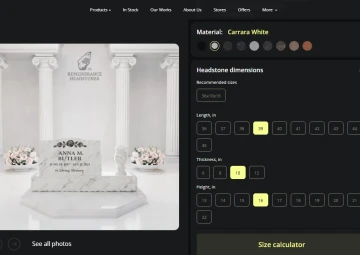
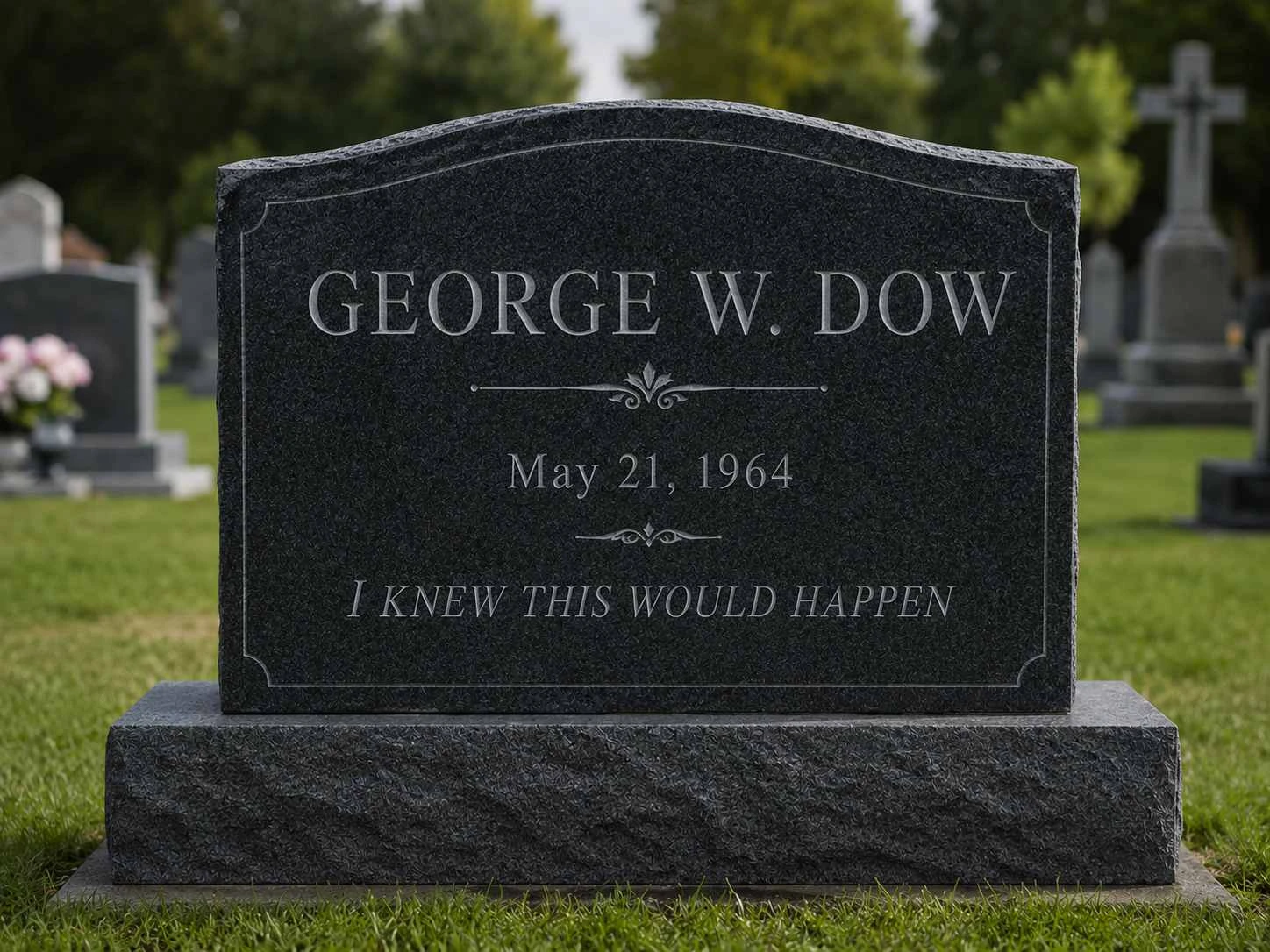
These require precision. A funny epitaph fails if the second line is too close to the first and the pacing collapses, or if the font weight makes the setup harder to read than the punchline. The 3D design preview at remembranceheadstones.com makes this visible before production — the exact font, the exact spacing, the exact proportions on the selected granite surface. AR visualization shows the finished stone at full scale in a real environment. If the joke depends on visual timing between two lines, that timing is visible in the preview.
Funny Headstone — Putting It on Granite That Holds for a Century
Any inscription. Any layout. Any font available in the design system.
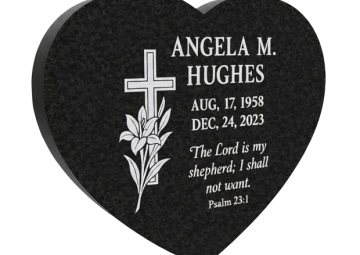
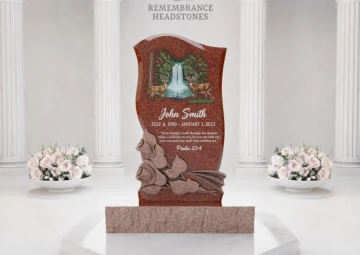
A funny headstone in real granite — Indian Black, Blue Pearl, Carrara White, Elite Grey, whichever color fits the tone the family wants — needs the same care in engraving as a traditional one. Depth consistency. Letter definition that holds as the stone weathers. Font choice that reads clearly from a standing distance in various light.
Funny headstone epitaphs printed in a light script font at small size can lose readability within a decade outdoors, and a joke you can't read at the grave isn't a joke anymore. The design preview stage works through this — not just what the inscription says but how it reads on the physical surface, in the physical proportions of the chosen stone.
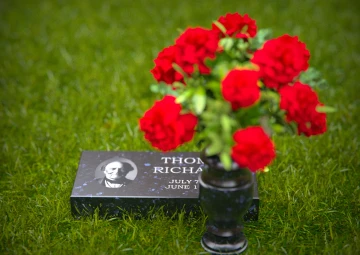
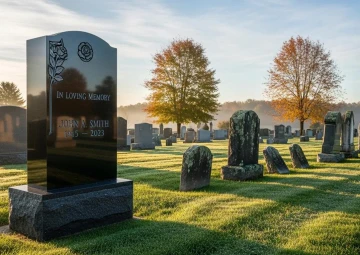
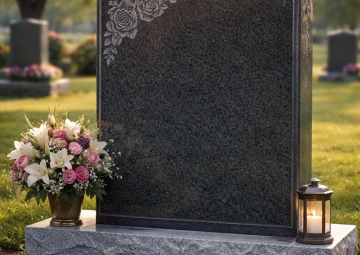
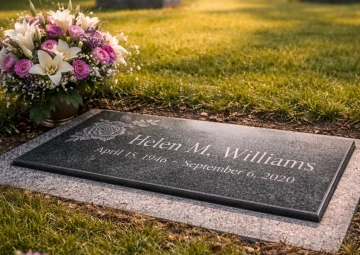
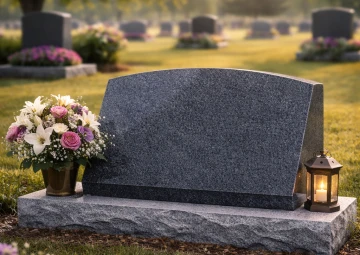
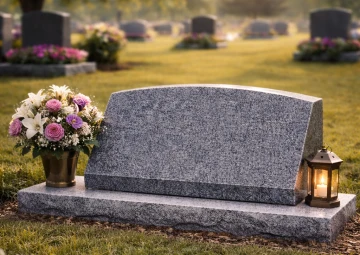
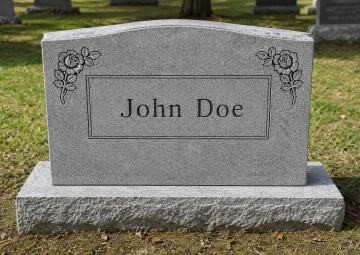
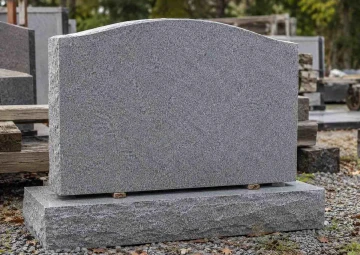
Flat headstones work well for shorter, punchier funny inscriptions — one or two lines with space around them. Upright monuments allow longer setups, room for a name and dates and then a fully separate funny line below. Bevel and slant headstones both work for humor — the slightly angled face reads cleanly from a standing position, which matters when the inscription has a visual timing element.
Pricing starts at $1,600 for flat markers, $2,240 for upright monuments, all inclusive of inscriptions, 3D design proof, cemetery coordination, and installation. Lifetime guarantee. In-house 0% financing up to 12 months, Klarna up to 24 months. Currently 20% off with full payment, 25% through May 25. Fourteen showroom locations across California, Texas, Oklahoma, Florida, North Carolina, Illinois, New Jersey, Washington, and other states — after-hours visits by appointment.
The team is used to unconventional requests. A funny inscription is not an unusual conversation.
FAQ
Are funny headstones allowed in most cemeteries?
Most American cemeteries regulate size, material, and height — not inscription content. Funny epitaphs are permitted in the vast majority of public and private cemeteries. Some religious cemeteries have guidelines about tone, so confirming with the specific location is worth doing before finalizing the design.
What makes a funny headstone epitaph actually work?
Specificity. The epitaphs that genuinely land — the ones people photograph and remember — are specific to one person's voice, one recurring joke, one thing they actually said repeatedly in life. Generic humor fades quickly on a grave. The specific thing the person actually said is what holds.
Can Remembrance Headstones engrave any custom text?
Yes. Any inscription is achievable. The 3D design preview shows exactly how the text appears on the selected granite before production, and the AR tool shows the finished stone at actual scale. There are no content restrictions on the inscription.
How do I make sure the joke reads correctly on the stone?
Font choice, line spacing, and proportions all affect how a funny epitaph reads — particularly if the humor depends on pacing between two lines. The design proof stage works through all of this before anything is cut. If the punchline timing depends on how the second line sits relative to the first, that's visible in the 3D preview.
Where can I see a showroom in person?
Fourteen locations across the country — California, Texas, Oklahoma, Florida, North Carolina, Illinois, New Jersey, Washington, and other states. After-hours visits available by appointment at all locations.