Every family used to have one - the keeper. The aunt with the box of photographs labeled in pencil, the uncle who knew which ship the great-grandparents sailed on, the grandmother whose kitchen table held the whole genealogy if you asked the right question on the right afternoon. When the keeper died, the family's memory usually scattered with the box. The quiet promise of a QR code for headstones is that the keeper's work can now live at the one address a family never loses: the monument itself. A small etched square in a lower corner, and behind it - if it is built with care - the box of photographs, the ship's name, the kitchen-table answers, permanently attached to the granite where every future generation will eventually stand.
Remembrance Headstones adds these codes to monuments across fourteen locations in eight states, and this article is about the part of the work that matters most and gets discussed least: not the technology, which is simple, but the archive behind it - what a memorial page should hold, how families assemble one that deserves the stone it's attached to, and how the code serves the estates and generations this studio builds for. The square is a door. Everything depends on what the family puts in the room.
The Box of Photographs Every Family Used to Keep
Begin with what the archive replaces, because it clarifies what the archive should be. The keeper's box was never comprehensive - it was curated by love. Sixty photographs out of ten thousand moments, the letters worth saving, the obituary clipped from the paper, a lock of hair, a recipe card. Its power was selection, and selection is exactly what a memorial page needs and what grieving families, handed an unlimited digital container, often forget. A page holding four hundred unsorted phone photos is a storage unit. A page holding sixty chosen images arranged by decade, one voice recording, and a life story written by the person who knew it best is an inheritance.
Our consultations treat the archive as a design object with the same seriousness as the granite: what goes in, what stays out, what order the story runs. Families are sometimes surprised to be asked editing questions about a webpage in a monument studio. They stop being surprised when they see a finished one. The best memorial pages we have helped build read like the keeper made them - because, functionally, somebody in the family just became the keeper, and the consultation is where they find out it's them.
What a Headstone QR Code Opens When It Is Built Like an Archive
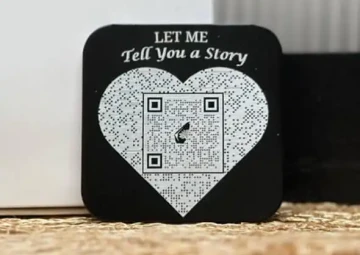
The technical facts take one paragraph, deliberately. A headstone qr code is a printed pattern any phone camera reads - no electronics, no battery, nothing in the stone but the etched or fired square - which resolves to a web address where the memorial page lives. The code stores nothing itself; the page holds everything. We set ours through permanent redirect links so the address in the granite never changes even if the archive moves hosts across the decades, and the page is established under the family's own ownership with transferable access, keeper to keeper, generation to generation. That is the entire machine. The rest is curation.
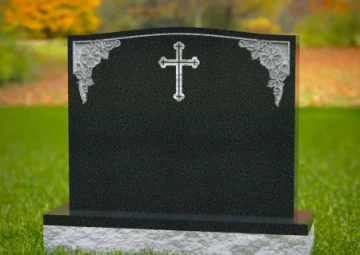
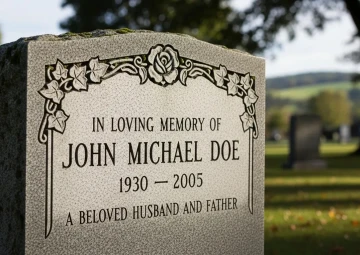
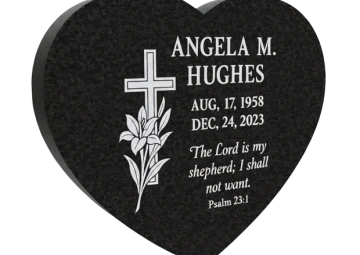
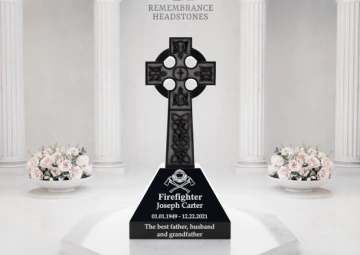
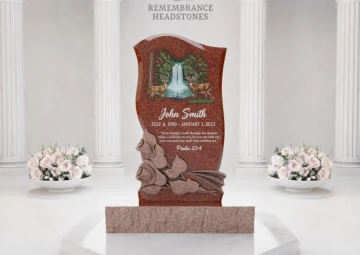
And curation is where the format earns its place beside the stone. Granite carries a name, dates, a verse, a portrait - the summary a stranger reads in forty seconds. The archive behind the square carries what granite physically cannot: the voice, the moving image, the long version. A monument and its archive are the abstract and the full text of the same life, and families who build both stop having to choose which details the stone must sacrifice. The stone edits ruthlessly, as stones should. The archive keeps what the editing cut.
Assembling the Archive Behind a QR Code for Headstone Visitors
The working recipe, from the pages families return to tell us about. A written life story of five hundred to a thousand words, in the family's own voice, opens the page - the piece future generations will quote. Photographs follow, sixty to a hundred, captioned with names and years, because an uncaptioned photo becomes a stranger within two generations and the captions are half the archive's value. Then the irreplaceables: audio, which families undervalue until they have it - a saved voicemail, a story told at a birthday, a hymn hummed over dishes. A headstone qr code video sits at the center for most families, and the strongest ones are unproduced: the person narrating their own workshop, the toast at the fiftieth anniversary, four minutes of an ordinary Sunday that became extraordinary the moment it became finite.
The deeper layers reward the families who build them. Scanned documents - the naturalization certificate, the discharge papers, the wedding license, the deed to the home place. A genealogy page linking the person to the keepers before them. The recipe cards, photographed with the stains. A qr code for headstone visitors built to this depth does something subtle at the graveside: it changes the visit's length. People stand longer at a stone when the person is fully present behind it, and our installation teams see the difference in the worn grass.
A QR Code on Headstone Granite Done at Monument Quality
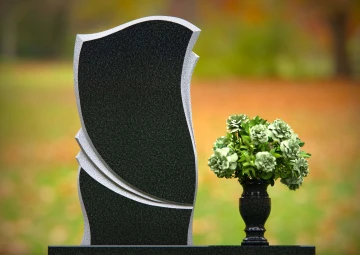
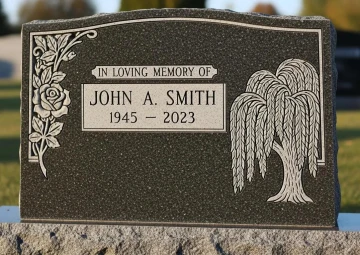
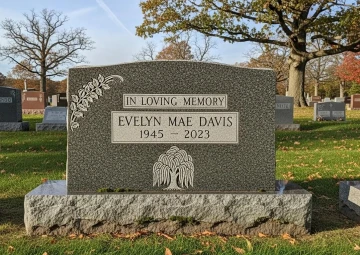
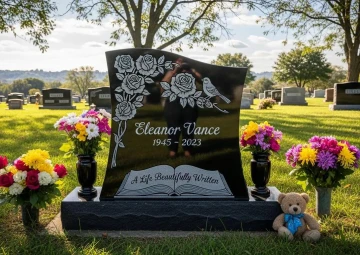
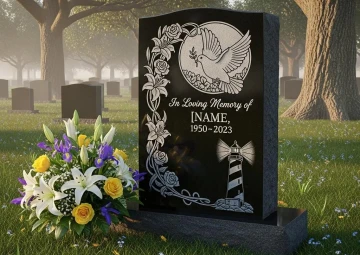
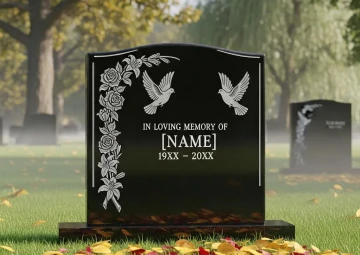
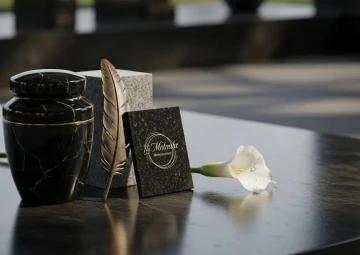
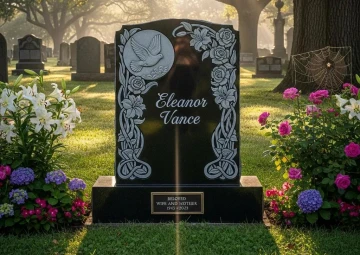
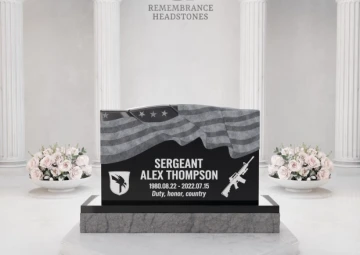
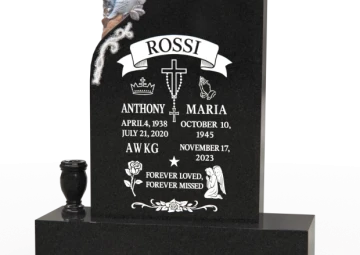
The physical square gets the same standards as the lettering beside it. A qr code on headstone stone is either laser-etched directly into polished dark granite - permanent as the name, weathering at the stone's own pace - or set as a fired porcelain or anodized plaque in a recessed flush mount for lighter granites and existing monuments, installed by our crews with mechanical anchoring rather than hope. Placement is composition: a lower corner, modest scale, present for whoever wants the door and invisible to the design for whoever doesn't. On our estate monuments the code often lives on the central family stone, one archive for the whole plot, with the individual markers left classically clean.
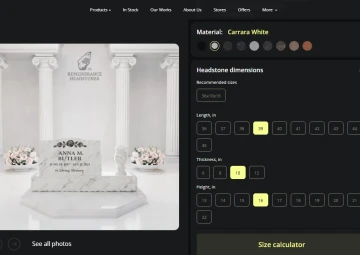
The studio's 3D configurator places the square in the design preview alongside everything else, and the AR view answers the only aesthetic question families actually have - whether it intrudes - in about ten seconds of standing in front of the full-size render. It doesn't. Two inches of quiet geometry in a corner reads, if anything, like a hallmark.
QR Codes for Headstones Across Generations and Estates
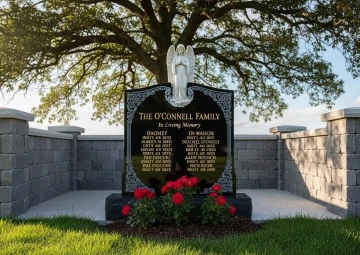
Here is where the archive meets the long-horizon planning this studio does daily. QR codes for headstones attached to family estate monuments become something no single-grave code quite is: the family's institutional memory, growing as the plot grows. The archive opens with the founding generation and adds chapters - each new name on a marker gets its pages, the genealogy extends downward, the guest book accumulates decades of visits. A great-granddaughter in 2070 scans the square her great-grandfather's family etched and reads the whole line at once, in their own words, at the one address the family kept.
Pre-need families take to this faster than anyone, for the reason that makes pre-need work generally: the subject of the archive is available to build it. A man arranging his own monument on a 36-month plan records his own stories, chooses his own sixty photographs, writes the long version himself. What people search for as qr headstones is, at this level, really estate planning for memory - and the families who treat it that way hand down something the probate lawyer never sees. Qr code for headstones planning belongs in the same conversation as the reserved granite lot and the signed design file, and in our consultations, increasingly, it happens there.
Headstone QR Codes for Immigrant Families and Archives in Two Languages
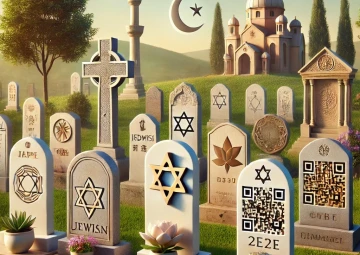
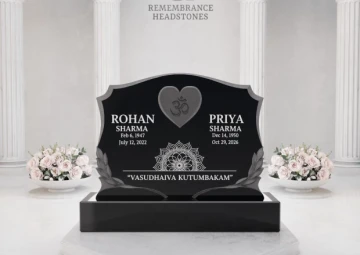
One more chapter belongs to the communities this studio serves most closely. Headstone qr codes solve a problem immigrant families have carried quietly for generations: the monument speaks one language and the family speaks two. The granite carries English, or carries Chinese or Cyrillic or Arabic with an English base - but the archive behind the code can hold both fully, the life story written twice, the audio in the grandmother's Ukrainian and the transcript in her grandchildren's English, the photographs captioned in whichever language each branch of the family reads.
We have built pages where the naturalization papers sit beside the village photographs from before the crossing, where a headstone qr code opens to a recording of a man telling, in Vietnamese, the story of the boat - and his American-born grandchildren, who never quite caught the language at dinner, reading along in translation at his graveside. A qr code headstone commission for these families is heritage infrastructure, plainly, and it pairs naturally with the bilingual lettering and heritage monuments already on the stone. The granite says where the family arrived. The archive keeps where it came from.
QR Codes on Headstones and the Etiquette of the Guest Book
The archive's living feature deserves its own guidance, because it keeps growing after the installation crew leaves. QR codes on headstones commonly open pages with a guest book - visitors leave messages, memories, photographs of their own - and across years it becomes the archive's most surprising room: the co-worker's story the family never heard, the student writing thirty years after the classroom, the anonymous entry every November 11th. Families should decide the guest book's rules at setup, and we walk them through it: open or moderated, whether entries publish immediately or after the keeper approves, who inherits the moderation when the keeper themselves is eventually a page in the archive.
The etiquette, for what our experience is worth: moderated but generous. Approve nearly everything, because the stranger's memory is the archive doing precisely what the keeper's box never could - collecting the parts of the person the family didn't own. One widow in our Essington region reads the new entries every Sunday night, and told her designer it feels like her husband still gets mail. There is no better one-sentence case for the whole format than that.
Commissioning the Square and the Room Behind It
The practical close. The code itself is a modest flat addition quoted with the monument - never a subscription trap, with the page under family ownership from the first day - and the design, placement, 3D and AR preview, and two revision rounds come free with every stone, as always. Current terms across the catalog: 10% off with full payment, 20% for veterans and 15% for first responders paying in full, Klarna and Affirm to 24 months, 0% in-house plans to 12, pre-need to 36 months interest-free with free storage, and through July 31 the Independence Day offer of 25% off two or more monuments.
Working demonstration stones stand in the showrooms - Sacramento, Los Angeles, Laguna Woods, Hesperia, Houston, Allen, Dickinson, Tulsa, Edmond, Enid, Essington, Tukwila, Roseland, Orlando - scan one and walk through a finished archive yourself, which answers in a minute what this article took pages to describe. Remote families from New York to Washington state build theirs by phone and video with the same team. And bring the box if your family still has one - the pencil-labeled photographs, the letters, the keeper's inheritance. The studio's favorite commissions begin exactly there: an old box on the consultation table, becoming permanent. Somebody kept all of it for a reason. This is the reason.