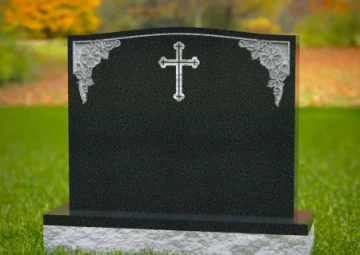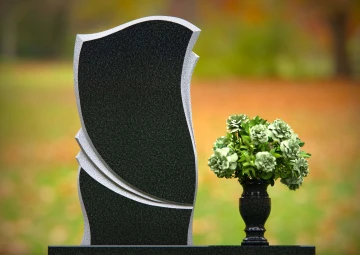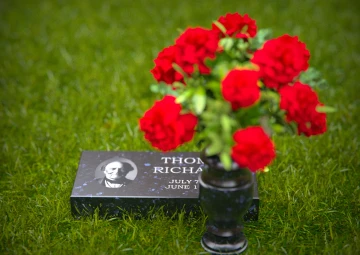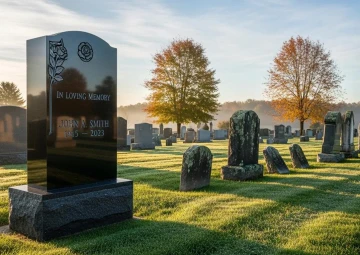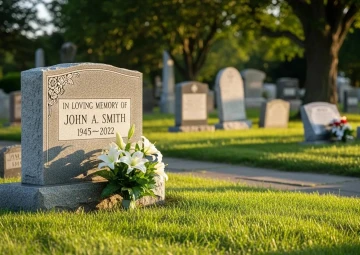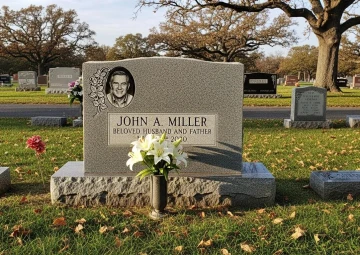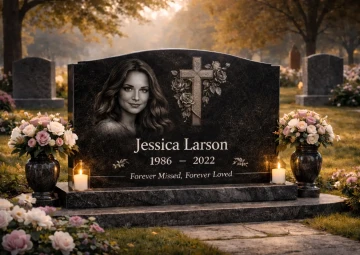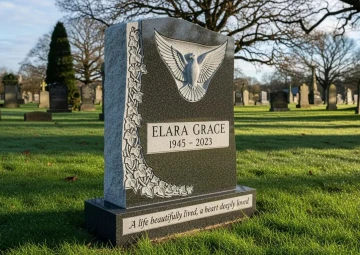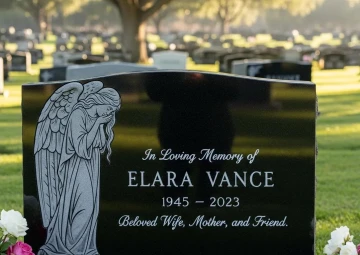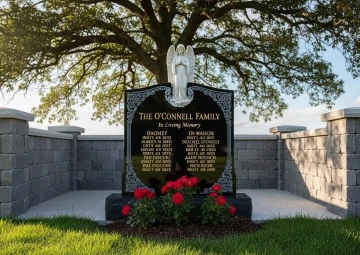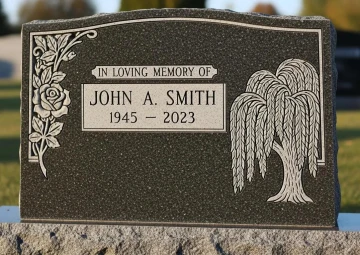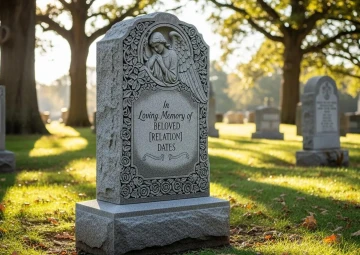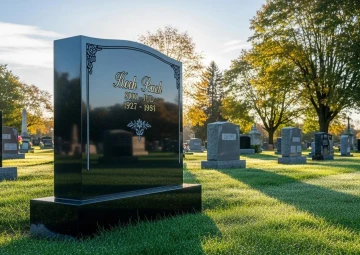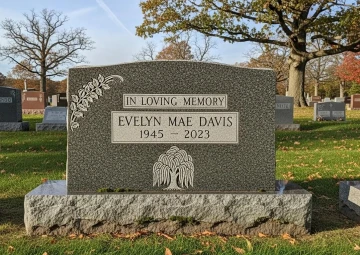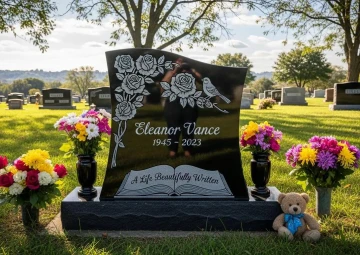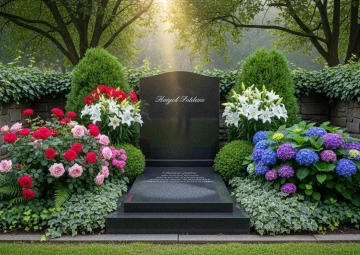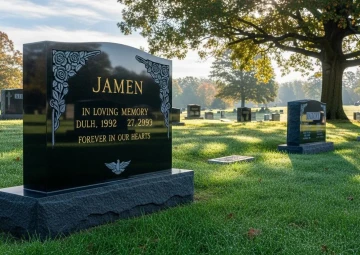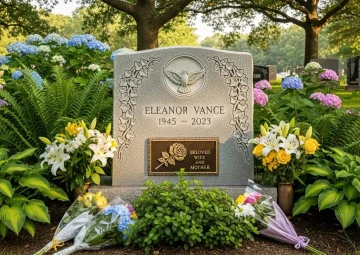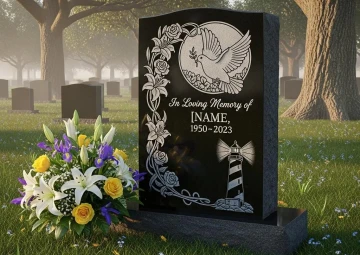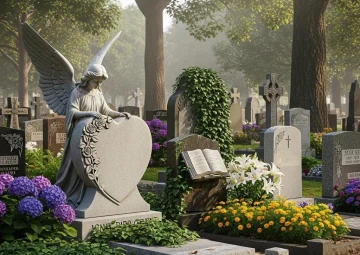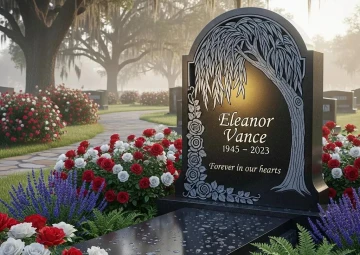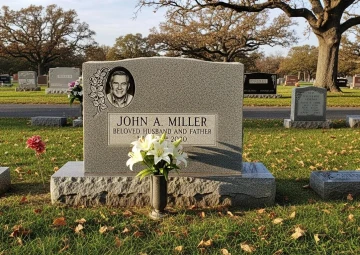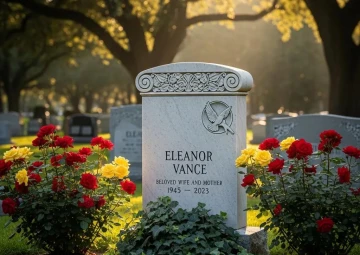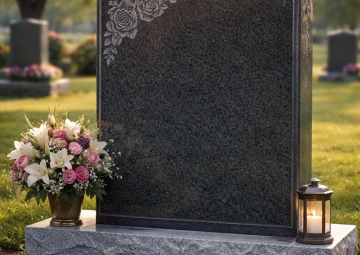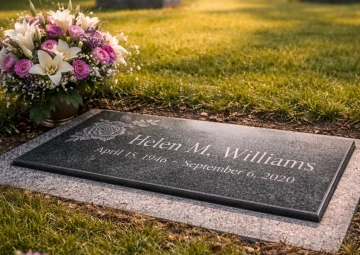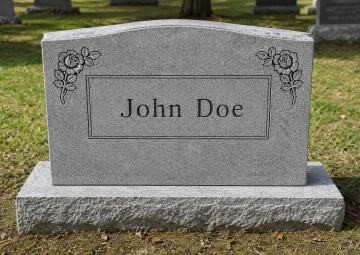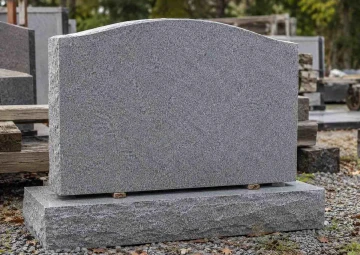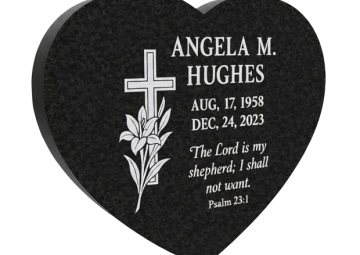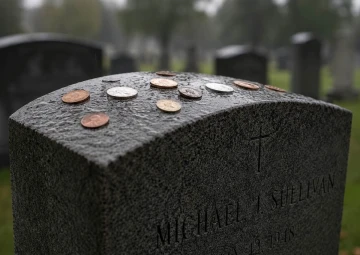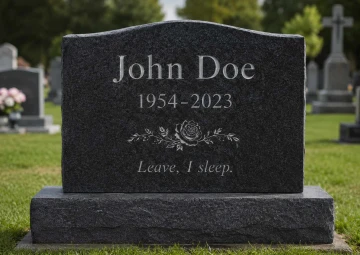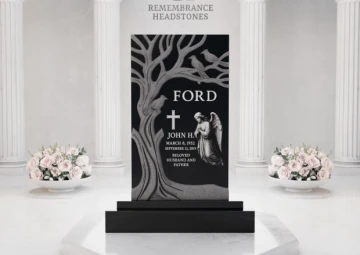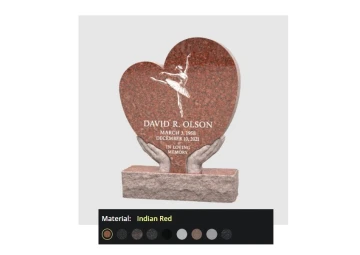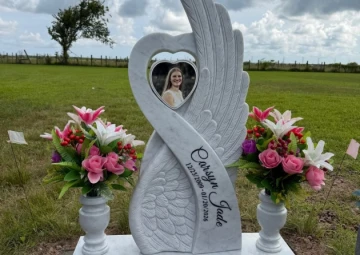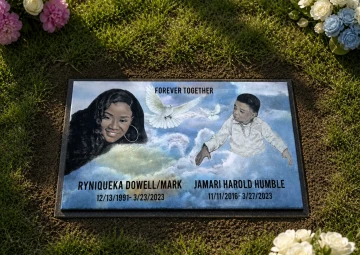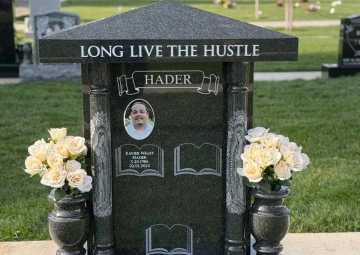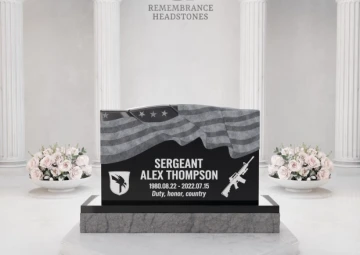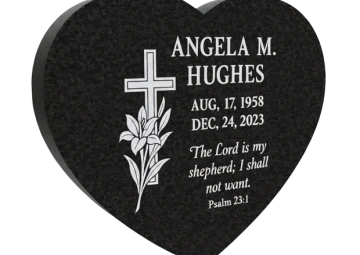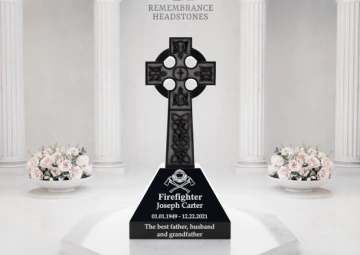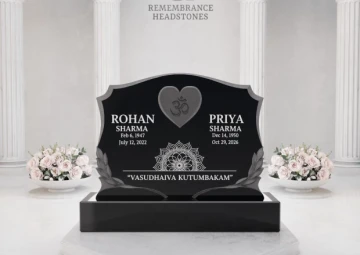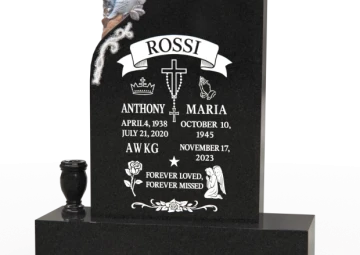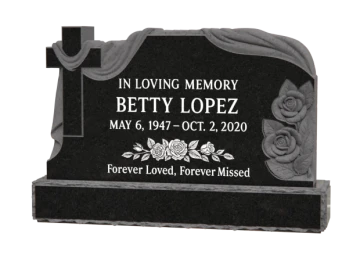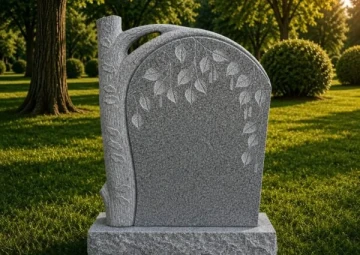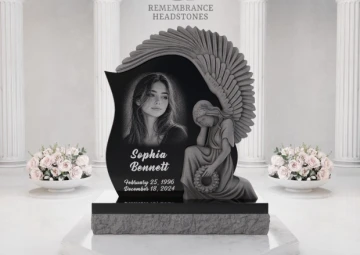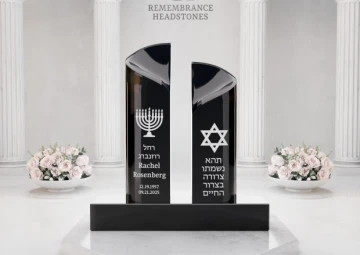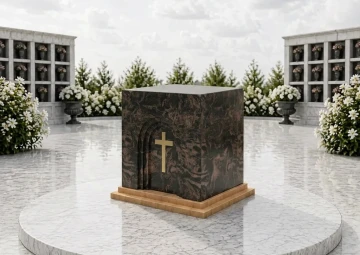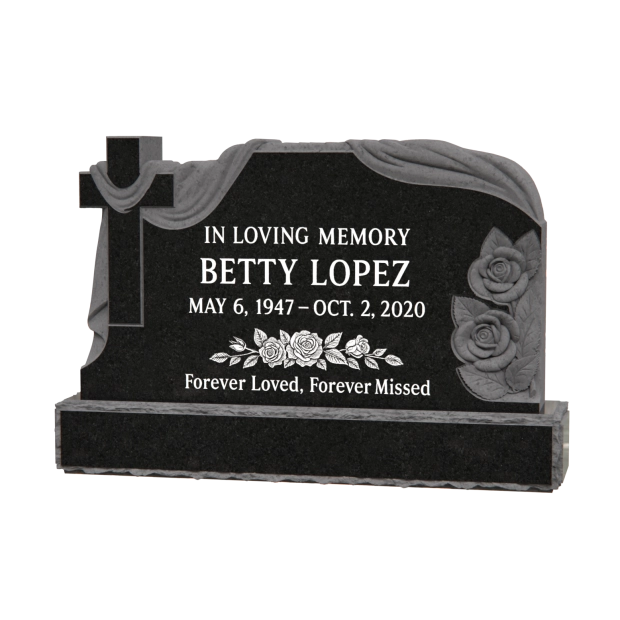
There are three opening lines you see on the vast majority of monuments in English-language cemeteries: in loving memory, rest in peace, and in memory of.
They have become so familiar that some people use them on autopilot and others reject all three as clichés.
The problem is that nobody asks the useful question, which is what each of them is supposed to do on a monument.
What the Phrase Does
An opening line is not an ornament. It is a signal that tells a reader what kind of object they are looking at, before they even learn the name.
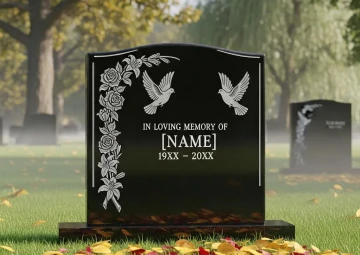
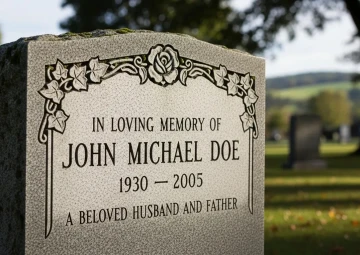
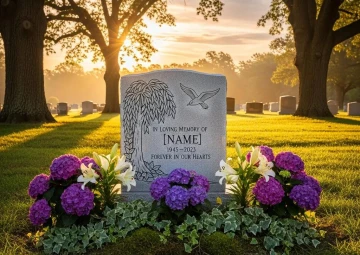
In loving memory of means the memorial was placed by people who loved the person. It is the family speaking.
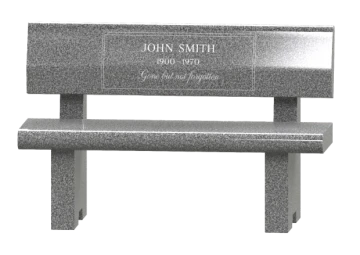
In memory of is the neutral form and makes no claim of relationship, which is why it appears on institutional plaques, benches, trees and dedications far more often than on family graves.
Rest in peace is a wish addressed to the dead rather than a statement to the living. It comes from the Latin requiescat in pace, used in Catholic burial from the eighteenth century onward and abbreviated to RIP on stones long before it became an internet convention.
Here lies is the oldest of the four and is now largely archaic, surviving mostly in humorous usage.
That is the entire vocabulary, and choosing between them is a choice about who speaks through the stone.
Placement on the Tombstone
The layout convention is nearly universal and worth respecting.
The opening line sits at the top of the face, above the name, in lettering smaller than the name itself. That makes it an introduction rather than a heading, and the commonest layout error is setting it in type so large that the phrase competes with the person.
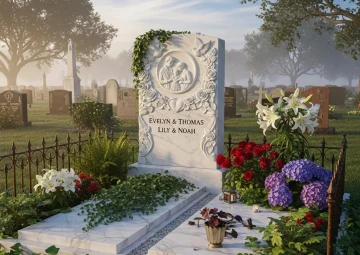
On a companion monument it goes above the shared surname and covers both people, which is one of the practical reasons families choose it.
On a flat marker, where space is tightest, it is the first thing to cut if the text does not fit. Nothing is lost by starting straight at the name.
Should You Use the Opening Phrase
The honest answer is that it depends on the stone.
Use it when the memorial needs a frame. A stone carrying only a name, dates and one short line can feel abrupt, and an opening phrase softens it. Use it also when the stone covers two people.
Skip it when space is short, when the epitaph is strong enough to stand alone, or when the family wants something that does not read like every other stone in the row.
There is no rule here and nobody will think less of a memorial for omitting it. There are excellent stones in every cemetery carrying a name, two dates and one good line, and nothing else.
In Loving Memory in Spanish
The direct equivalents, used by bilingual families and on stones carrying two languages.
En amorosa memoria de is the literal translation. It is used, though it reads slightly formal.
En memoria de is the standard and appears on the majority of Spanish-language stones. In memory of.
En loving memoria is not correct Spanish. It is a half-translation and should never be carved.
Descanse en paz, rest in peace, often abbreviated to Q.E.P.D., which stands for que en paz descanse. It appears on the overwhelming majority of Spanish-language headstones and is the equivalent of RIP.
Siempre en nuestros corazones, always in our hearts.
Tu recuerdo vive en nosotros, your memory lives in us.
Any bilingual stone should be proofread by somebody fluent in the language before anything is cut. Accents matter, and a missing tilde is permanent.
RIP on a Tombstone
Worth its own note, because the abbreviation has changed meaning within one generation.
On a stone, RIP is a traditional Catholic formula with several centuries of use behind it, and nobody in a cemetery reads it as casual.
Online, RIP has become the standard shorthand for any death announcement, and for a lot of people under forty it now carries a slightly offhand register.
The practical consequence is simple. On a memorial, write it out in full. Rest in peace carries the weight the abbreviation has lost, and it costs one line. The same applies to a rip tombstone or a rest in peace tombstone, and to anything marking a rip grave or a rest in peace grave: the full wording reads better than the initials.
If the family prefers the Latin, requiescat in pace is entirely correct and appears on plenty of older stones.
Alternative Phrases to Consider
If the standard openings feel too familiar, these do the same job in a different register.
Beloved. One word, above the name. Spare and effective.
Cherished.
Always remembered.
In memory and in gratitude, which suits somebody who was cared for at the end.
Forever ours.
Here rests.
Until we meet again, which works as an opening as well as a closing.
Sacred to the memory of, which is the nineteenth-century formula and sits well in a heritage section where the neighbours use it.
That last one is worth remembering. If a stone is joining an 1880s row, the older phrasing helps it belong in a way modern wording does not.
In Loving Memory Quotes and What Follows the Opening
The opening phrase is a frame. What matters is what sits under it, and the strongest combinations are the plainest.
In loving memory of Margaret Ellen Doyle 1934 to 2021 She grew roses nobody could match
Four elements, no ornament, and it is a better stone than most.
Where a longer line is wanted underneath, these hold up carved:
Forever in our hearts. Until we meet again. Loved beyond measure. Home at last. Well done, good and faithful servant. To live in hearts we leave behind is not to die.
Avoid anything requiring context, anything explaining the death, and anything that needs two lines to reach its point.
In Loving Memory Plaques
The phrase appears more often on plaques than on headstones, because plaques commemorate rather than mark a grave.
Bench plaques are the most common, typically 8 by 2 inches, cast bronze or engraved granite, and the convention is short: in loving memory of Name, dates, sometimes with one line.
Tree and garden plaques, mounted on a stake, a boulder or a wall.
Building and room dedications, where in memory of is more usual than in loving memory because the tone is institutional.
Home memorial plaques, mounted on a house or garden wall.
For anything outdoors, two practical points determine whether it is still there in twenty years. Granite outlasts bronze without maintenance, and bronze needs waxing once or twice a year to stay bright. And use stainless steel fixings, because ordinary steel rusts, stains the surface below it, and swells inside the fixing hole until something cracks.
The Line Underneath Is What Gets Read
Every stone in a row says in loving memory. Only one says she read every book in the house twice.
The opening line is doing a small job well. Put the effort into the line beneath it.