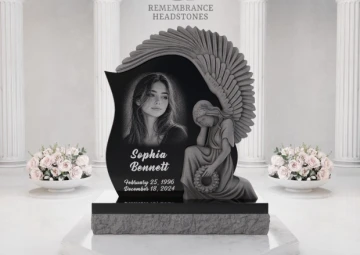
Angels are the most frequent figurative element in Western cemeteries, and almost nobody orders one knowing what the different poses traditionally meant.
They did mean something. Victorian funerary sculpture used a language with rules, and knowing it makes an old cemetery far more interesting to walk through. It also helps when choosing.
The Traditional Vocabulary
Angel with an arm raised upward. The oldest form. It indicates the direction the soul has taken and, by extension, expresses confidence about it. Reassurance rather than grief.
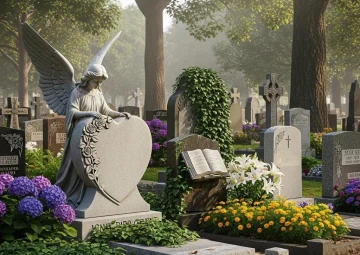
Weeping angel. A draped figure lying face down over a tomb, monument or column. This form was popularised in the late nineteenth century by the American sculptor William Wetmore Story, whose Angel of Grief was carved in 1894 for his own wife's tomb in Rome. Copies and adaptations spread across Europe and the United States within a generation.
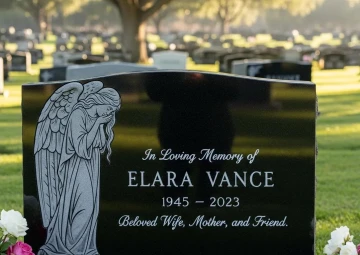
A weeping angel tombstone says the opposite of the first type. It expresses the grief of the living rather than the destination of the dead, and a weeping angel grave is most often chosen for a death that felt wrong: a young person, a sudden loss, a child.
Angel with a trumpet. The resurrection and the last judgement. Announcement rather than mourning.
Angel with a wreath or garland. Victory over death, borrowed from Roman funerary imagery.
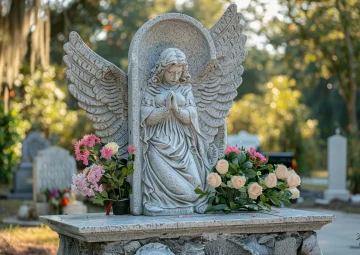
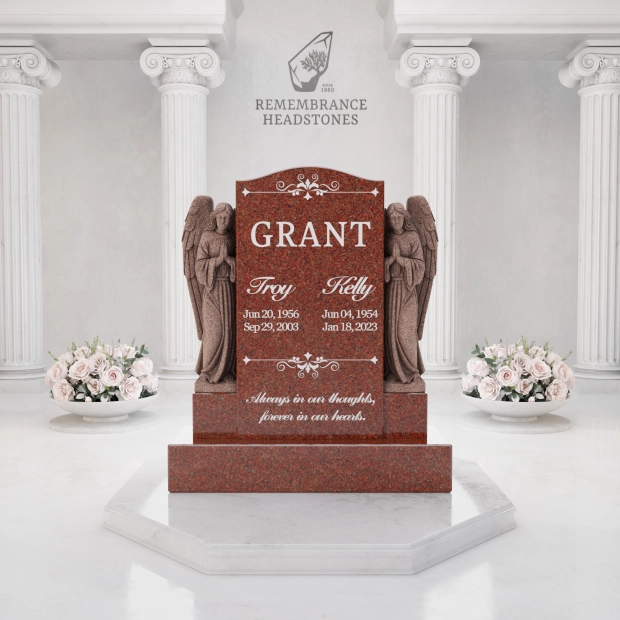
Angel with hands clasped in prayer. Intercession. The figure is praying for the person buried there.
Recording angel, holding a book or scroll. The deeds of the deceased written down, and by implication favourably.
Sleeping angel or sleeping child. Used almost exclusively for infants and young children, and one of the most affecting forms in any cemetery.
Cherubs, the plump winged children, are a different order of being from the tall robed figures. In funerary art they mark the graves of children, while angels mark adults. A cherub on an adult grave is a modern usage.
Why Angels Are Everywhere
The cemetery movement of the early Victorian period reimagined burial grounds as landscaped parks meant to be walked in rather than as churchyards.
That created a demand for sculpture, and angels solved several problems at once. They were doctrinally acceptable across most Christian denominations, they read clearly at a distance, and they could be produced in quantity by workshops rather than commissioned individually.
By the 1880s catalogues offered standard figures at set prices, which is why the same designs recur across cemeteries hundreds of miles apart.
Angel Grave Markers Today
Modern angel memorials come in four forms and they differ greatly in cost.
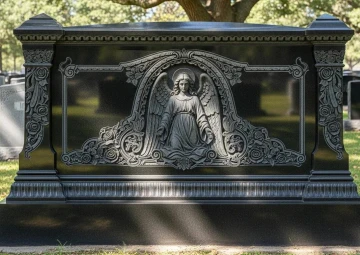
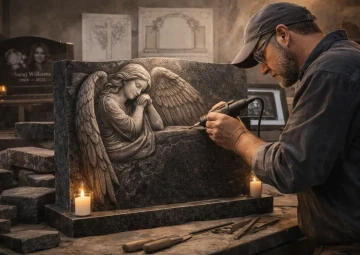
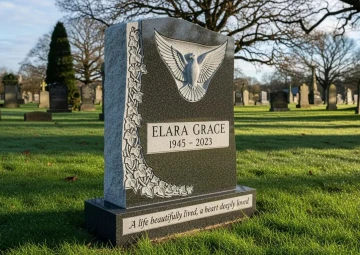
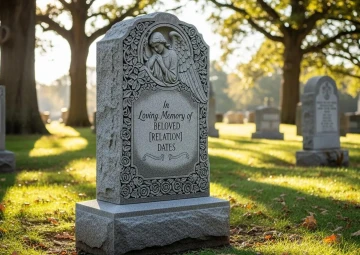
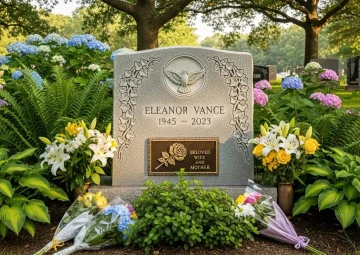
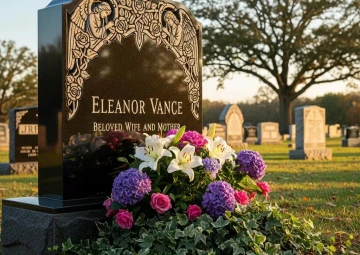
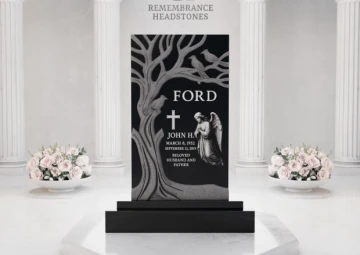
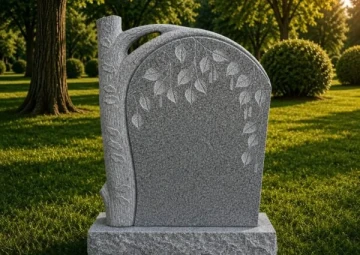
Carved relief on a flat or upright stone. An angel cut into the face of the memorial rather than standing free. The most common modern approach, the most durable, and permitted in almost every section.
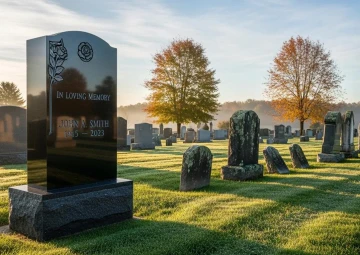
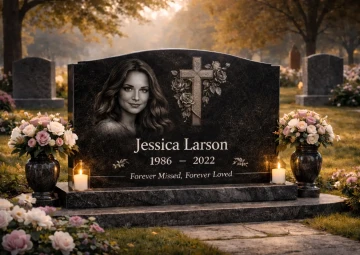
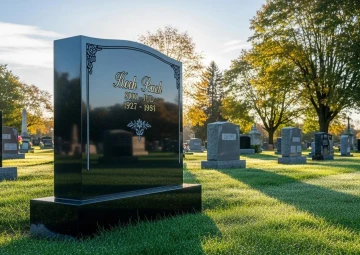
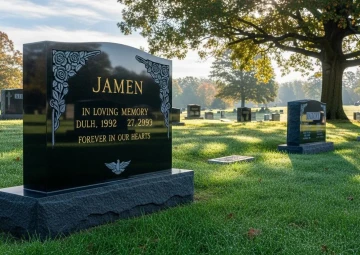
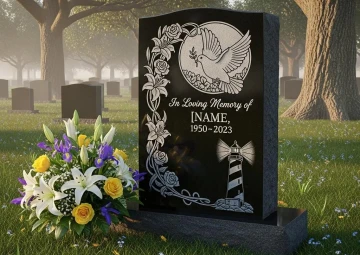
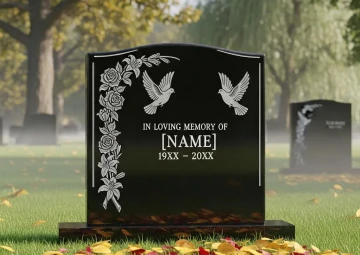
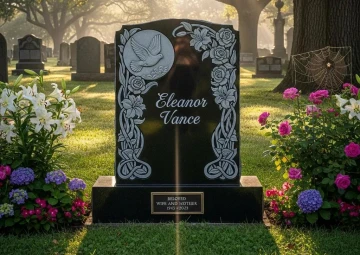
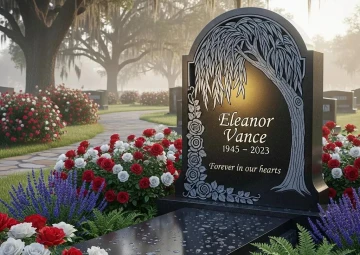
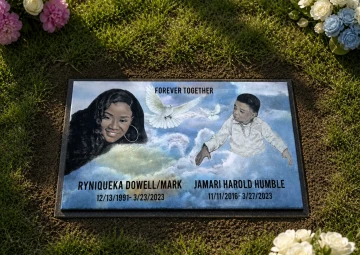
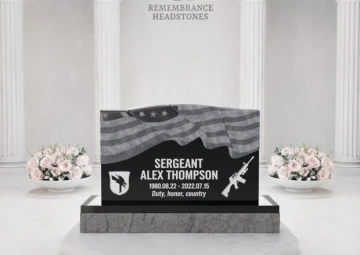
Laser etching on polished black granite, producing a photographic image. Inexpensive relative to carving, and it needs black or very dark granite to read at all.
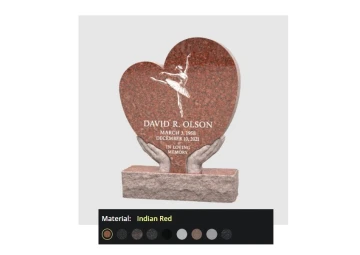
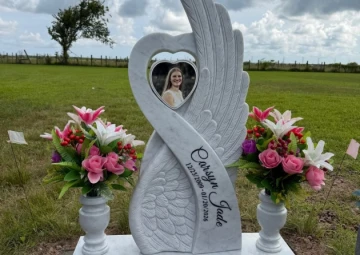
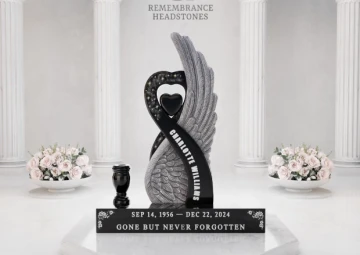
Shaped memorial, where the whole stone is cut to an angel silhouette. Expensive because the yield from a block is lower.
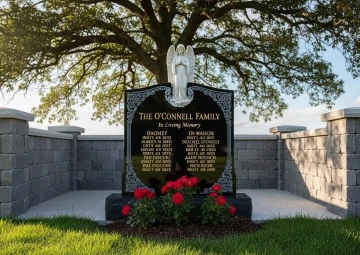
Freestanding statue. The most expensive by a wide margin and the most restricted. Many cemeteries do not permit freestanding statuary at all, and those that do usually cap the height.
Ask what your section permits before settling on a form. A relief carving will be approved almost anywhere. An angel statue frequently will not.
Angel Headstone Designs That Work
Observations from what families choose and are glad about later.
One angel, not several. The commonest mistake is an angel plus a floral border plus a portrait plus a long epitaph, all competing on one face.
Relief carving reads better than etching on light stone. An etched angel needs black granite. On grey it is a faint ghost.
Think about the row. A full statue in a section of flat markers is a rules problem and a visual one. In a section that already has statuary it fits perfectly.
Weeping angels suit particular losses. They are a strong statement and they read as grief rather than as comfort. That is right for some families and wrong for others, so choose deliberately rather than on appearance.
Sleeping angels for children. The tradition exists for a reason and it is one of the few worth following without question.
Cemetery Angel Statues and Maintenance
Three points if a freestanding figure is permitted and wanted.
Granite rather than marble. Almost every deteriorated cemetery angel, the ones with missing fingers, eroded faces and lost wingtips, is marble. Marble dissolves in acid rain and the fine projecting detail goes first. A granite figure keeps its detail indefinitely.
Projecting elements are vulnerable. Outstretched arms, extended wings and raised hands are what break, whether from frost, falling branches or vandalism. A figure with arms held close to the body survives better.
Fixing matters. A cemetery angel statue is set to its base with stainless steel dowels and monument setting compound. Ask what is being used, because anything other than stainless steel will rust and split the stone within twenty years.
Angel Urns
A large category in cremation and worth separating from cemetery statuary.
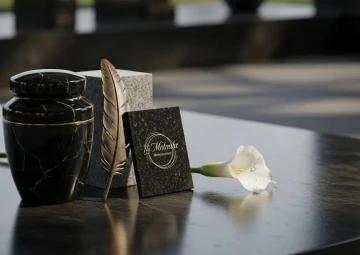
Cast metal or resin angel urns with a figure holding or standing beside the vessel. Widely available, typically 80 to 300 dollars, and intended for the home or a niche.
Granite angel urns for burial or outdoor placement. Heavier and considerably more durable, and the right choice if the urn is going anywhere weather can reach it.
Keepsake angel urns, small enough to hold a portion of ashes, frequently bought in sets so several family members each have one. Angel urns for ashes in this size are among the most-sold keepsakes there are.
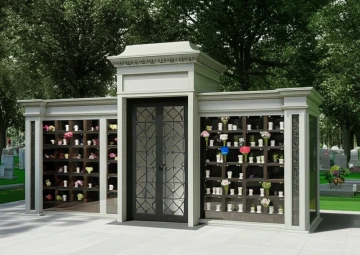
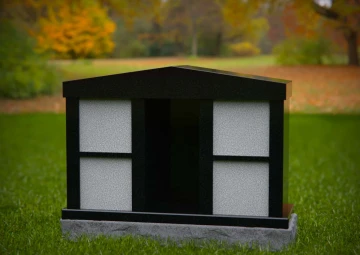
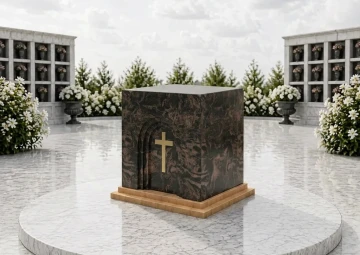
If the urn is going into a columbarium niche, check the internal dimensions first. An angel urn for ashes is wider than a plain one and a great many will not fit a standard niche, which tends to be discovered at exactly the wrong moment.
Cherub Plaques and Wall Memorials
A cherub plaque appears in three settings.
Columbarium niche faces, where a cast or carved cherub is set into the plate.
Memorial garden walls, mounted on masonry.
Mausoleum interiors.
Cast bronze is the usual material for a fixed plaque, and the same rules apply as for any outdoor bronze: stainless steel fixings, mount on stone rather than timber, and wax annually if you want it to stay bright rather than darkening to brown.
For a home memorial garden, cherub wall plaques in engraved granite cost less than bronze, need no maintenance whatever, and will outlast the wall they are mounted on.