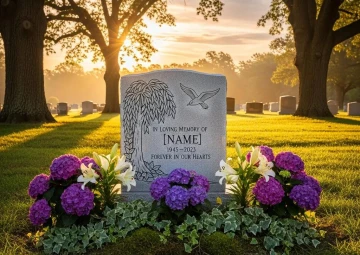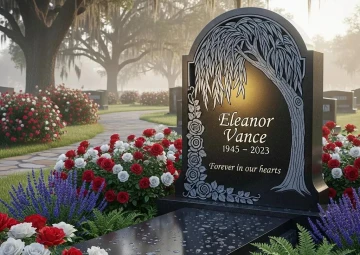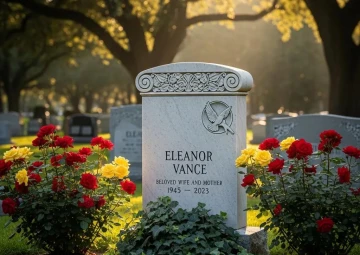
Headstone Sayings and How Families Really Choose Them
It is the wording that gives families the hardest time and the quickest answer once the right question is asked.
People start by searching for a beautiful quote. It is the wrong approach to begin with. One should start with the constraint, with the person, and the quote usually writes itself.
The Constraint That Is Ignored First
There are far fewer words that fit into a headstone than you think.
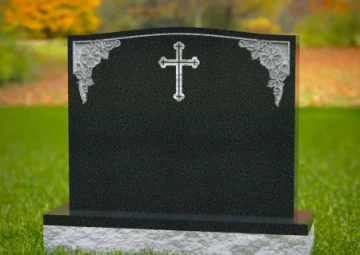
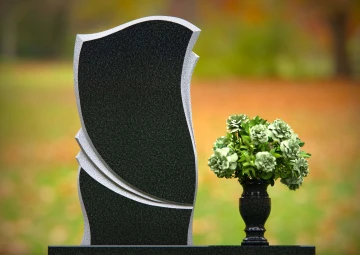
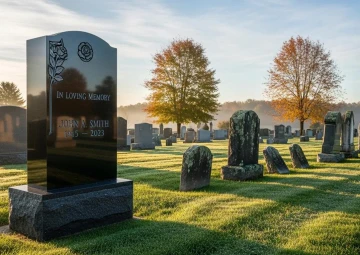
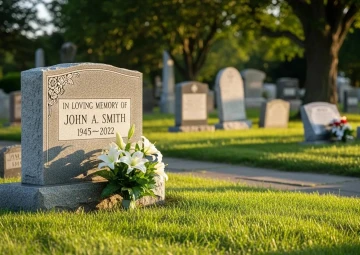
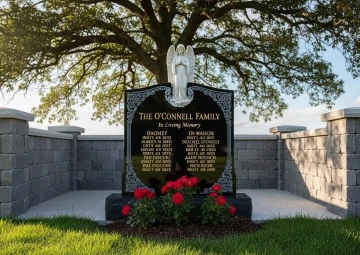
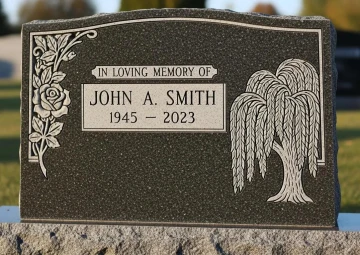
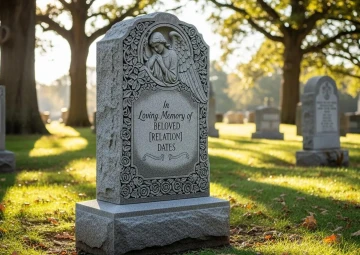
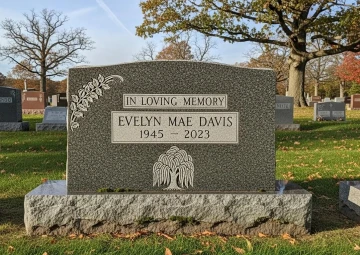
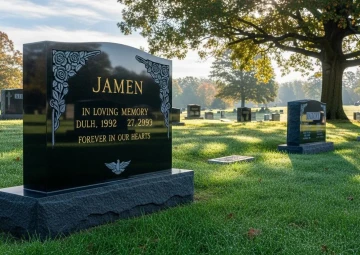
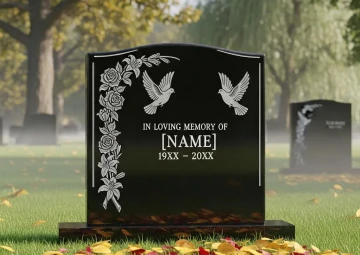
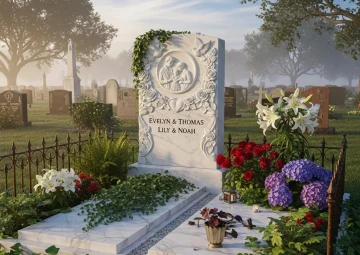
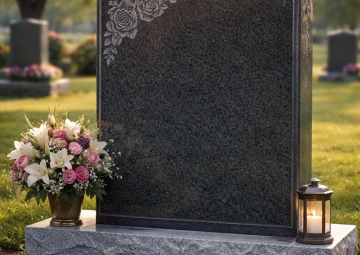
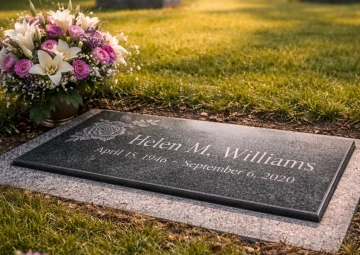
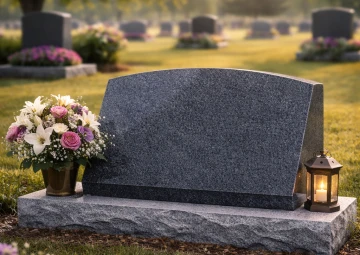
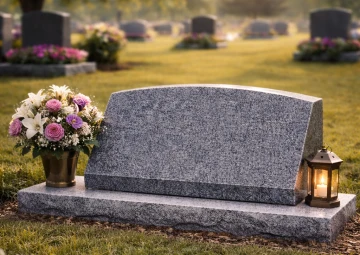
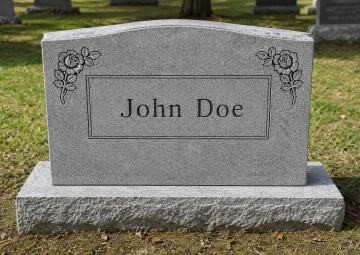
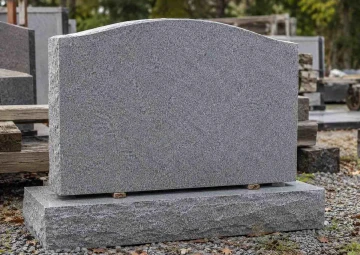
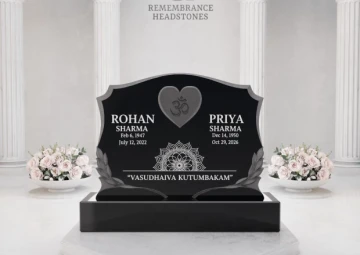
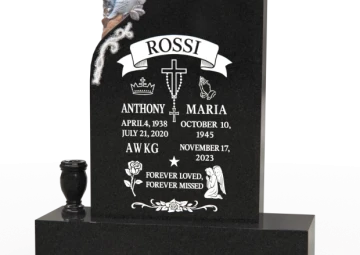
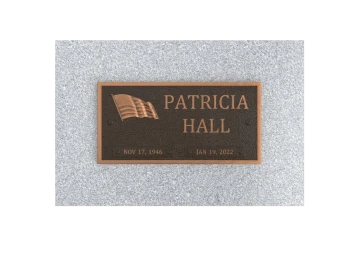
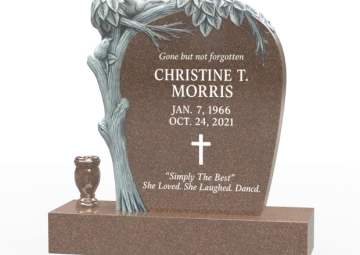
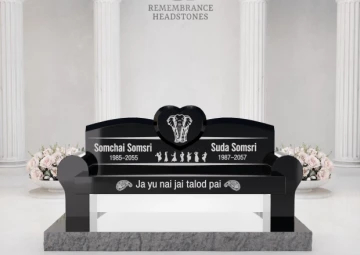
On a regular 24 by 12 inch flat memorial, after the full name and both dates are engraved, one can fit perhaps four short lines. On a single upright monument, one can fit six or eight lines. On a companion monument bearing two names, there is less room than you think, not more.
This is not a restriction to battle against. This is the discipline that gives headstone inscriptions their power. A line that survived cutting down to six words is almost invariably better than the paragraph it began as.
Thus, the practical starting point is to ask your supplier how many characters the inscription will accommodate at a legible size, then write for that limit.
Start With Four Questions
These will do far more than any list of quotes.
How did they call themselves? Robert, Bob, Bobby, Dad. The name on the birth certificate is not necessarily the name for a stone. Families often default to the formal version and later regret it.
What was their daily routine? A trade, a role, an obsession. Farmer. Nurse. Thirty-eight years in teaching. Keeping bees. This informs an unfamiliar visitor in fifty years far more than any sentiment.
What did they always say? Almost every family has its own special saying. It sounds too ordinary to engrave until one sees it engraved, after which it becomes the only thing on the tombstone that sounds like the person.
Whom is this tombstone for? A widow coming weekly is looking for something different from grandchildren who will see it three times in their lives. Both are equally valid; they are not the same inscription.
Answer these four questions and the wording becomes obvious.
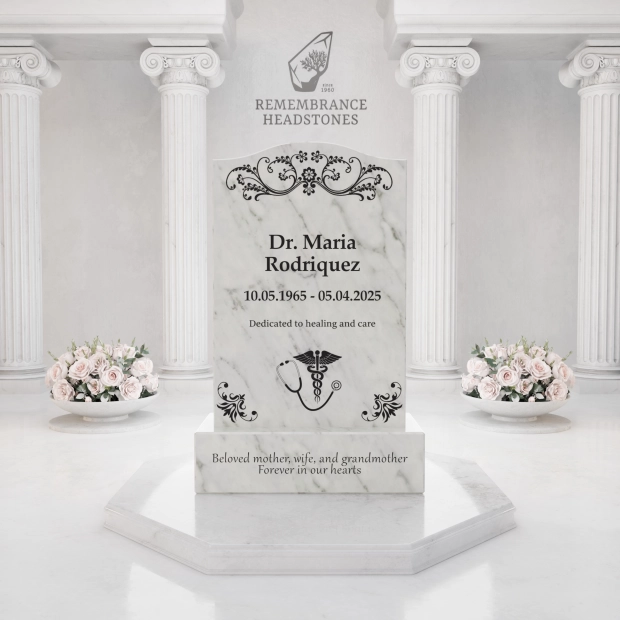
Short Headstone Sayings and Short Tombstone Sayings That Work
The most common lines in American cemeteries, and they are common for a good reason.
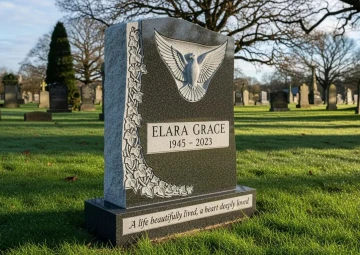
Forever in our hearts. Until we meet again. Gone from our sight but never from our hearts. Rest in peace. At rest. Loved beyond measure. Home at last. Always in our thoughts. Well done, good and faithful servant. Together forever.
None of them is unique and none needs to be. A tombstone inscription is not a literary piece that has to distinguish itself. A tombstone is a marker that must be readable, appropriate and true for a hundred years, and the conventional phrases become conventions precisely because they pass this test.
Grave Marker Sayings for Relationships
The workhorse of headstone inscriptions and worth getting right.
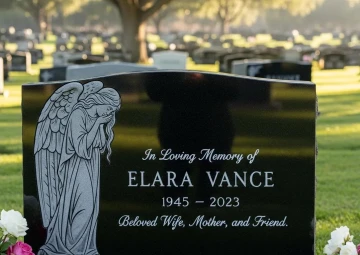
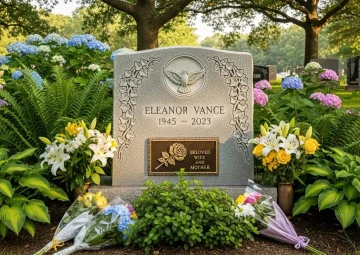
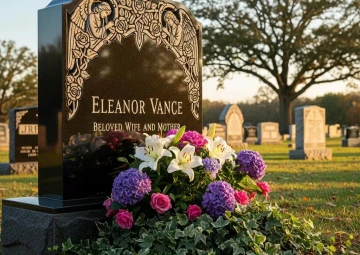
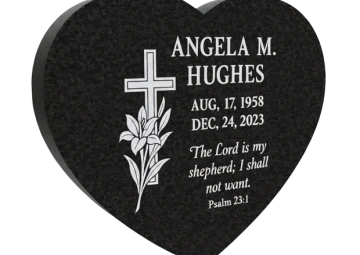
Beloved wife, mother and grandmother. Devoted husband and father. Loving mother, grandmother and great-grandmother. Son, brother, friend. Cherished daughter and sister.
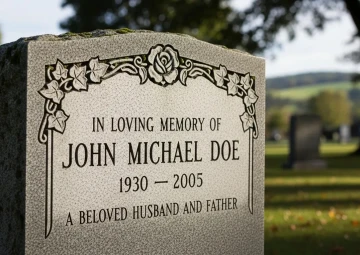
Two bits of advice based on experience. Order the roles according to the order that mattered to the person in question, not according to the order of formality. And look forward – a headstone that says mother and grandmother will still be correct when the great-grandchildren come, while the one listing all relationships at the moment of death dates itself.
Headstone Sayings for Mom and Headstone Sayings for Mother
The lines families choose most for a mother and what they have in common.
Her children rise up and call her blessed. She opened her arms to the poor and extended her hands to the needy. A mother's love is forever. Loved by all who knew her. She made a home wherever she was. Everything I am, she made.
The pattern here is that mothers get inscriptions about what she gave. It is good to notice that pattern because it helps you decide whether this applies to your mother or some other approach does. For instance, a woman who ran a business for forty years deserves an inscription about that rather than nurturing.
Headstone Lines for a Father
And the same for fathers, where the pattern changes somewhat.
He fought the good fight. A man of his word. Hard worker, good father, good friend. He built things that lasted. Rest now. Faithful unto death.
Fathers get lines about what they did rather than what they were. Again, it is a pattern rather than a rule; and the greatest inscriptions are those breaking this pattern when necessary.
The Best Ones Are Specific
Here is what really separates a memorable inscription from a forgettable one, and eloquence is not among them.
She grew roses that nobody could match. He never missed a game. Forty-one years at the mill. Put the kettle on. She read every book in the house twice. He would have fixed it.
Every one of these lines is clear, none of them is poetic, and each tells something about the real person. Amidst forty headstones all saying beloved wife and mother, the one that says put the kettle on is the one people stop at.
If the family can agree on a specific inscription, it beats the general ones.
What Else Can Go Onto a Headstone Besides Words?
It should be remembered that there are other forms of inscription carrying meaning besides words.
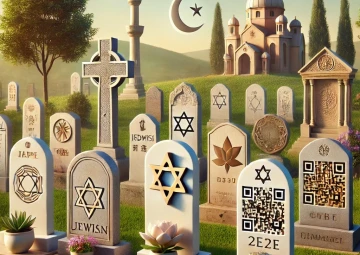
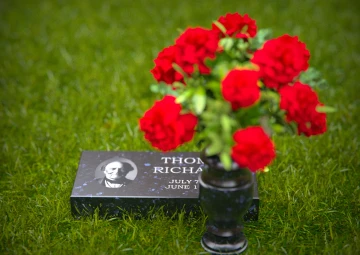
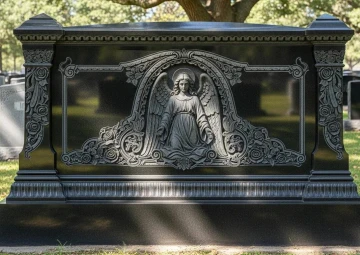
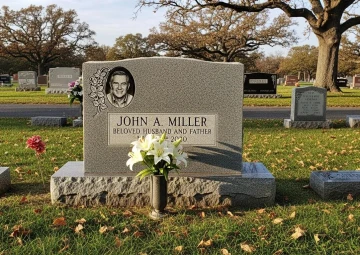
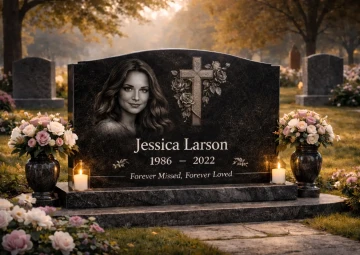
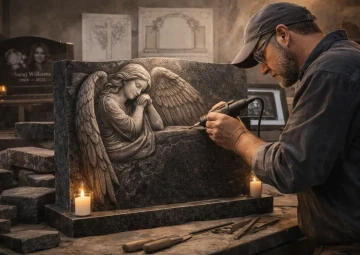
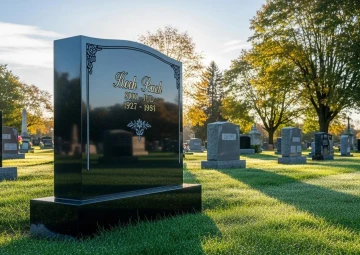
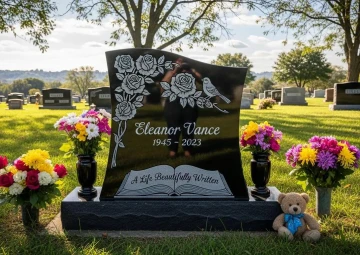
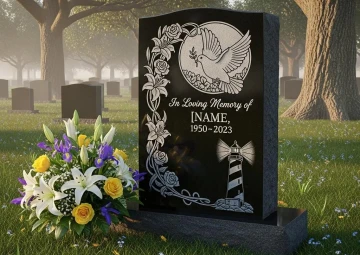
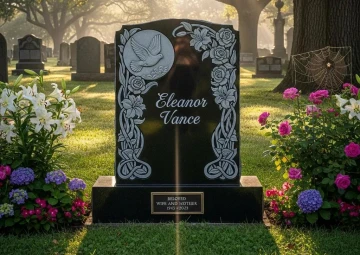
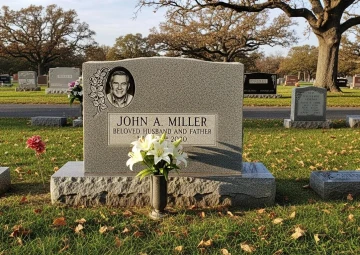
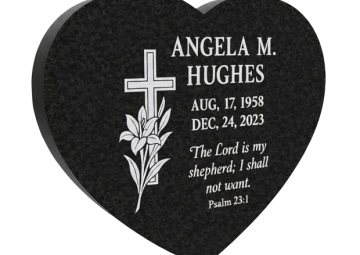
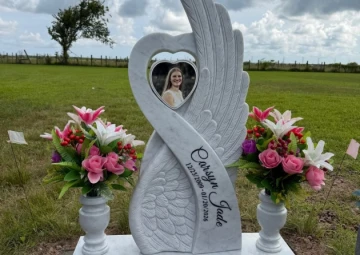
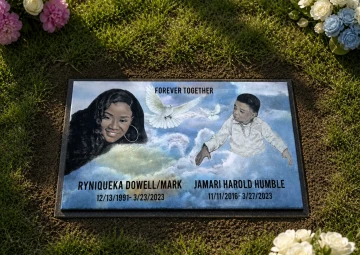
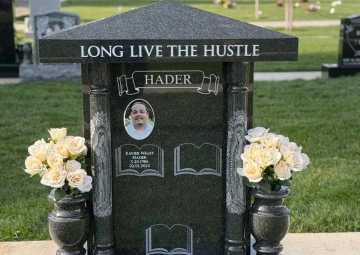
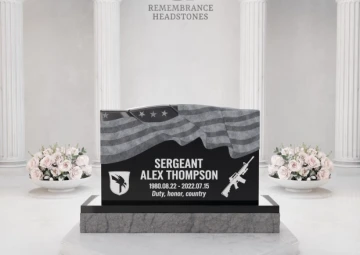
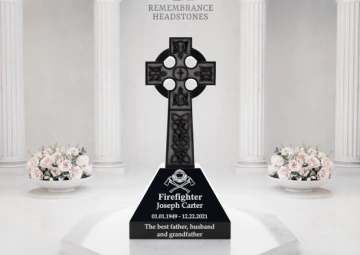
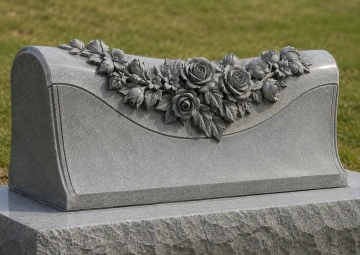
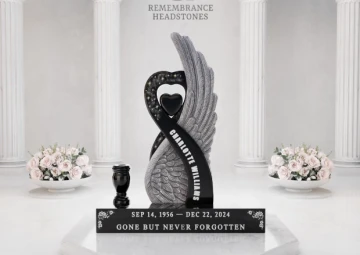
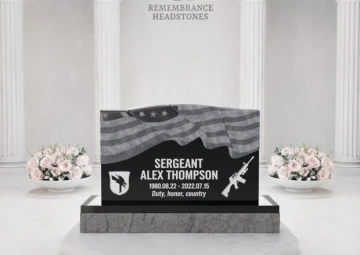
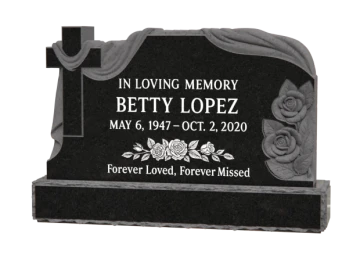
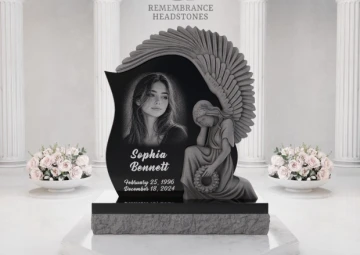
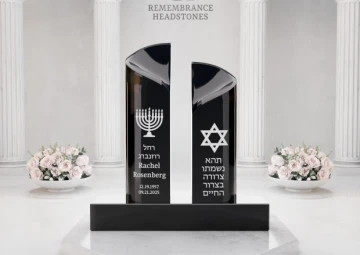
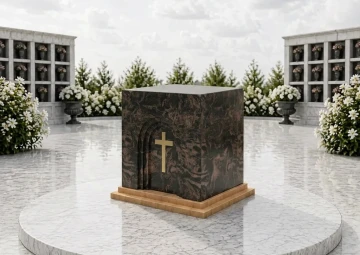
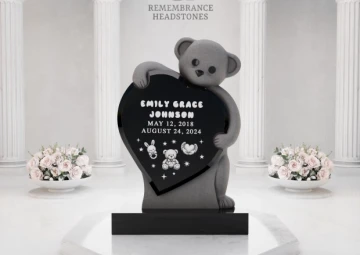
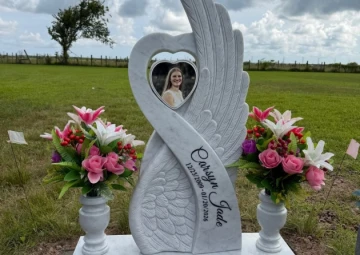
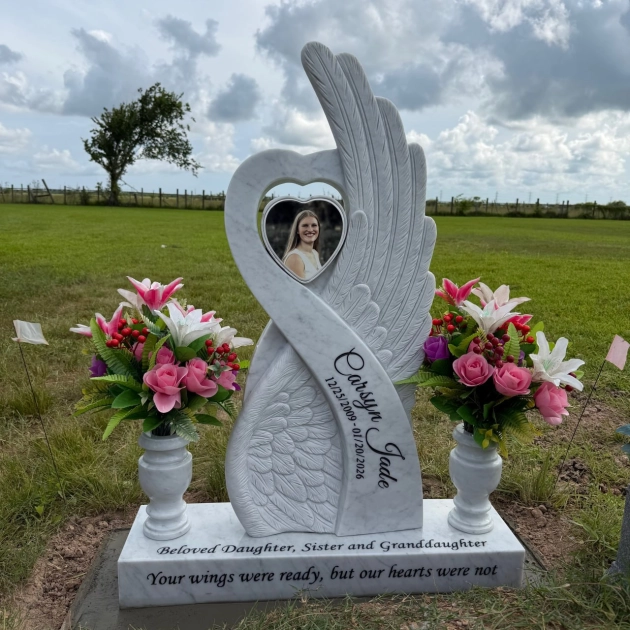
A trade symbol or a service insignia speak volumes in very few signs. An image motif from the deceased's life: a fishing boat, a horse, a musical stave, a particular flower. A portrait, that looks photographic on black granite. The handwriting, reproduced from a letter or a greeting card. This becomes increasingly requested, and is the most moving option available. Another language. For a family whose native tongue was not English, the line in it beats any translation.
Weird Tombstone Sayings and the Funniest Tombstone Sayings
There are, they have a long history, and not for everyone.
The really funny epitaphs in old cemeteries are usually the work of people who planned their own headstone, which is the main point. A humorous inscription chosen by the deceased himself or herself is a final joke. The same line chosen by the relatives can mean quite differently to someone reading it twenty years later.
If the deceased clearly expressed his or her wishes, honor it. If not, be careful and bear in mind that a tombstone inscription is seen by people who did not know the deceased and cannot catch the tone.
Cemeteries have a say in the matter as well. They usually reserve the right to reject a particular inscription, profanity and anything they find offensive included.
Practical Tips Before Making a Decision
Ask your supplier about the character count of the inscription before falling in love with a certain line.
Read it out loud. Anything sounding awkward when spoken will look even worse when carved.
Double-check all spellings and dates and let somebody else check them as well. Granite is a document. A misspelling of the name is permanent, and changing it means recutting the whole stone.
Leave room for the future. On a companion headstone, plan the spot for the second name and date in advance, not in fifteen years.
Approve the proof that will show the exact layout, font and spacing, not just a description.
And Do Not Rush It
Cemeteries do not impose any deadlines on placing a memorial. There is no deadline at all, and a great many families place one six months or a year after the burial.
The words are almost always better for that waiting period, because the ones chosen in the fortnight after a funeral are chosen by people who are not thinking clearly, and the words cut into the stone will last a century.
A note on how this gets searched. Sayings for a headstone, tombstone sayings and headstone sayings all describe the same decision, and what to write on a tombstone is the same question phrased as a task. Headstone sayings for dad follow the pattern above: fathers get lines about what he did. And loving memory quotes short headstone sayings, searched as one phrase, is what people mean when they want an opening line plus one true sentence underneath it.